
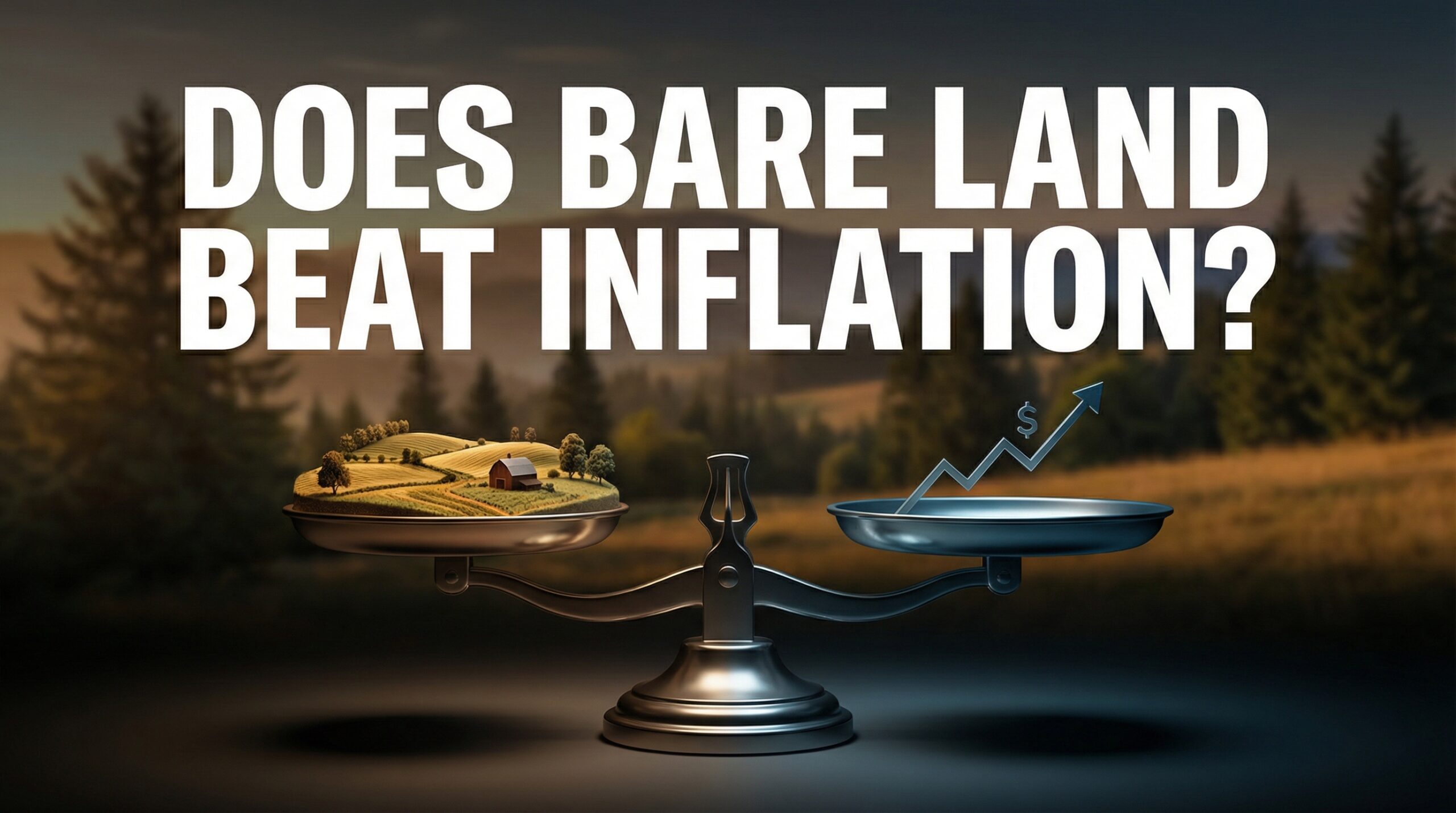
Owning bare land in Oregon sounds simple on paper. You buy the acreage, you hold it, and eventually it appreciates. In practice, bare land ownership in Oregon involves a web of zoning rules, county tax assessments, special deferral programs, and carrying costs that most owners never fully understand until they decide to sell, develop, or exchange the property.
This guide walks through everything a bare land owner in Salem, Marion County, or anywhere in the Willamette Valley needs to know: how Oregon zones and taxes undeveloped land, how farm and forest deferral programs work, what your land is actually costing you each year, and how a 1031 exchange can turn stagnant acreage into income producing property without a capital gains tax bill.
Read more: Sell or Hold Oregon Bare Land? An Honest Financial Analysis (2026)
Why People Own Bare Land in Oregon
Oregon land owners typically fall into one of four categories:
- Inherited land owners. Family timberland, farmland, or acreage passed down through generations, often with little documentation about zoning status or tax history.
- Investment buyers. Land purchased years ago as a long term appreciation play, with no immediate plan for development.
- Future development holders. Land bought with the intention of building or subdividing eventually, now sitting idle while plans stall.
- Working farm and forest owners. Land actively used for agriculture or timber production, which qualifies for very different tax treatment than land held purely as an investment.
Each category faces a different set of tax rules, zoning restrictions, and financial outcomes. Understanding which category your land falls into is the first step to making a smart decision about it.
Read more: How Do I Find Out If My Oregon Land Has Water Rights? (Step-by-Step Verification Guide)
How Oregon Zones Bare Land
Oregon has some of the strictest statewide land use planning laws in the country, and zoning has a direct effect on what you can do with your property and how it gets taxed.
Exclusive Farm Use (EFU) zoning covers a large share of Oregon’s rural acreage, particularly in the Willamette Valley. Land zoned EFU is intended to stay in agricultural production, and the state limits non-farm development on it. If your land is zoned EFU and used primarily to make a profit through farming, it can qualify for a special farm use tax assessment automatically, without even filing an application in some counties.
Forestland zoning applies to acreage held predominantly to grow and harvest marketable timber. Forestland can also qualify for a special assessment that lowers the taxable value, provided the land meets stocking and use requirements.
Non-EFU farm zoning covers rural land outside exclusive farm use zones that is still used for agriculture. This land can qualify for special assessment too, but the requirements are stricter. Owners generally need to show gross farm income in three of the last five years, with income thresholds that scale by acreage.
If you are not certain how your parcel is zoned, your county planning department or assessor’s office can confirm it. Zoning status is often the single biggest factor in what your land is worth, what you can legally do with it, and how much you pay in property taxes every year.
Property Taxes on Bare Land in Oregon
Oregon’s statewide average effective property tax rate runs a little under one percent of assessed value, and it varies significantly by county. In Marion County, where Salem sits, rates track close to the state average, but the real story for bare land owners is not the rate itself. It is whether your land qualifies for a special assessment program.
Without a farm or forest deferral, bare land is typically assessed closer to its market value, and property taxes are billed on that full amount every year, regardless of whether the land generates any income. For owners of 50, 100, or 200 plus acres, that tax bill can run into the thousands of dollars annually on land that is producing zero cash flow.
Read more: How Do I Avoid Capital Gains Tax When Selling Oregon Property? (Three Legal Tools That Work)
Farm and Forest Deferral Programs
Oregon offers meaningful tax relief for land actively used in agriculture or timber production:
- Forestland special assessment reduces the taxable value of land held predominantly to grow and harvest trees of a marketable species. In Marion County and most Oregon counties, this program does not require a minimum acreage or income threshold, but the land does need to meet stocking and management requirements.
- EFU farm use special assessment often applies automatically to land zoned for exclusive farm use when owners farm the land for profit. Several counties, including Marion County, do not require a minimum acreage or income level.
- Non-EFU farm deferral applies to farmland outside an EFU zone, but requires the owner to document gross income across a multi-year window and reapply periodically.
These programs exist because Oregon wants to keep farmland and forestland in production rather than see it sold off for development. The tradeoff is disqualification penalties. If you remove land from farm or forest use through a change in use, a subdivision plat, or a sale to a non qualifying buyer, the county can recover some of the deferred taxes from previous years, sometimes going back as far as ten years.
This is exactly why many land owners who inherit or purchase acreage without understanding the deferral status end up with a tax surprise at the point of sale or transfer. Before making any decision about your bare land, it is worth confirming its current special assessment status with your county assessor.
The Hidden Cost of Holding Undeveloped Land
Here is the part most bare land owners never see clearly: land that is not generating income is not a neutral asset. It is an asset that is actively losing ground.
Bare land in Oregon has historically appreciated at a modest average pace, often trailing general inflation over long stretches. When your land’s appreciation rate sits below the rate at which the cost of living rises, your purchasing power shrinks every year, even while the land’s dollar value on paper stays flat or edges up slightly. Add in annual property taxes, insurance, and basic maintenance, and many bare land owners are quietly losing real wealth without a single bill ever telling them so.
This is the core problem that pushes many Oregon land owners toward one of two paths: developing the land themselves, or exchanging it into income producing property through a 1031 exchange.
Turning Bare Land Into Income: The 1031 Exchange Option
A 1031 exchange, named for Section 1031 of the Internal Revenue Code, allows an owner to sell investment or business real estate and reinvest the proceeds into another qualifying property while deferring capital gains tax. For bare land owners sitting on decades of appreciation, this is one of the few legitimate ways to reposition that equity into an income generating asset without triggering a tax bill at the time of the exchange.
The rules are strict, and they matter:
- You have 45 calendar days from the closing of your relinquished property to formally identify replacement property in writing.
- You have 180 calendar days total to close on the replacement property, and this clock runs concurrently with the 45 day window, not in addition to it.
- All proceeds must pass through a qualified intermediary. You cannot touch the funds directly at any point, and your own real estate agent, attorney, or CPA generally cannot serve as your qualified intermediary if they have represented you within the prior two years.
- Both deadlines are calendar days, not business days, and the IRS does not grant extensions outside of a federally declared disaster area.
- Since 2018, only real property qualifies for a 1031 exchange. Nearly any type of investment real estate qualifies as like kind to another type, so investors can exchange bare land for an apartment building, retail property, farmland, or other income producing real estate.
Because the timeline is unforgiving, the research into replacement properties should start well before you list your land for sale, not after closing. Missing either deadline by even one day collapses the exchange into a fully taxable sale.
What a 1031 Exchange Can Look Like in Practice
Land owners who successfully exchange bare or underperforming acreage into income property commonly move from an asset generating little or no cash flow into one producing consistent monthly income, sometimes in the range of 10 percent or more in annual returns, depending on the replacement property and market conditions. The exact outcome depends heavily on the property type, financing, and management structure chosen, so working with a broker who understands both land valuation and 1031 mechanics matters more than it might seem.
Local Considerations for Salem and Willamette Valley Land Owners
Land ownership in the Salem area and greater Willamette Valley comes with a few regional realities worth knowing:
- Urban Growth Boundaries cities like Salem and Keizer restrict residential and commercial development around their boundaries, which directly affects your land’s value based on where your parcel falls.
- Marion, Polk, and Yamhill counties each administer their own assessor’s office and special assessment application deadlines, generally falling around April 1 for most farm and forest programs, so timing matters if you are applying or reapplying.
- Willamette Valley soil quality is among the most productive in the state, which is part of why so much of the region carries EFU zoning and why farmland here tends to hold strong long-term value compared to other parts of Oregon.
- Timberland in the foothills surrounding the valley often qualifies for forestland deferral. Even owners of modest acreage should confirm whether their land already has this designation before assuming their tax bill is fixed.
Frequently Asked Questions
Does bare land in Oregon automatically get a lower property tax rate?
No. Bare land is assessed near market value unless it qualifies for a farm use or forestland special assessment. Zoning alone does not guarantee reduced taxes. In most cases the land also has to be actively used for a qualifying farm or forest purpose.
What happens to my tax savings if I sell land that has a farm or forest deferral?
If the land no longer qualifies because of a change in use, subdivision, or a sale that ends the qualifying use, the county can recover some of the deferred taxes from previous years, depending on the program.
Can inherited land qualify for a 1031 exchange?
Yes, in most cases, as long as it is hold for investment or business purposes rather than personal use. This makes it a common option for families who inherit acreage they have no intention of farming or developing themselves.
Is bare land a good long term investment in Oregon?
It can be, particularly in high growth corridors near urban growth boundaries. But land held purely for appreciation, without any income generation, often underperforms inflation over time once property taxes and holding costs are factored in.
How do I find out if my land qualifies for a special assessment?
Contact your county assessor’s office directly. In Marion, Polk, or Yamhill County, staff can confirm your parcel’s current zoning, its special assessment status, and any deadlines for applying or reapplying.
Final Thoughts
Bare land in Oregon carries real value, but value on paper and value in your pocket are two different things. Understanding your zoning, confirming your special assessment status, and honestly evaluating whether your land is helping or quietly costing you money are the first steps toward making a confident decision, whether that means keeping the land, developing it, or exchanging it into income producing property.
If you own bare land in Salem, Marion County, or anywhere in the Willamette Valley and you are not sure what it is really worth or what it could be earning, a free land evaluation is the fastest way to find out.
Get My Free Oregon Land Evaluation
503-949-5025 | al@cronemiller.com | HomesForSaleSalemOregon.net
Al Cronemiller | Oregon Land Specialist | MORE Realty | Salem, Oregon