
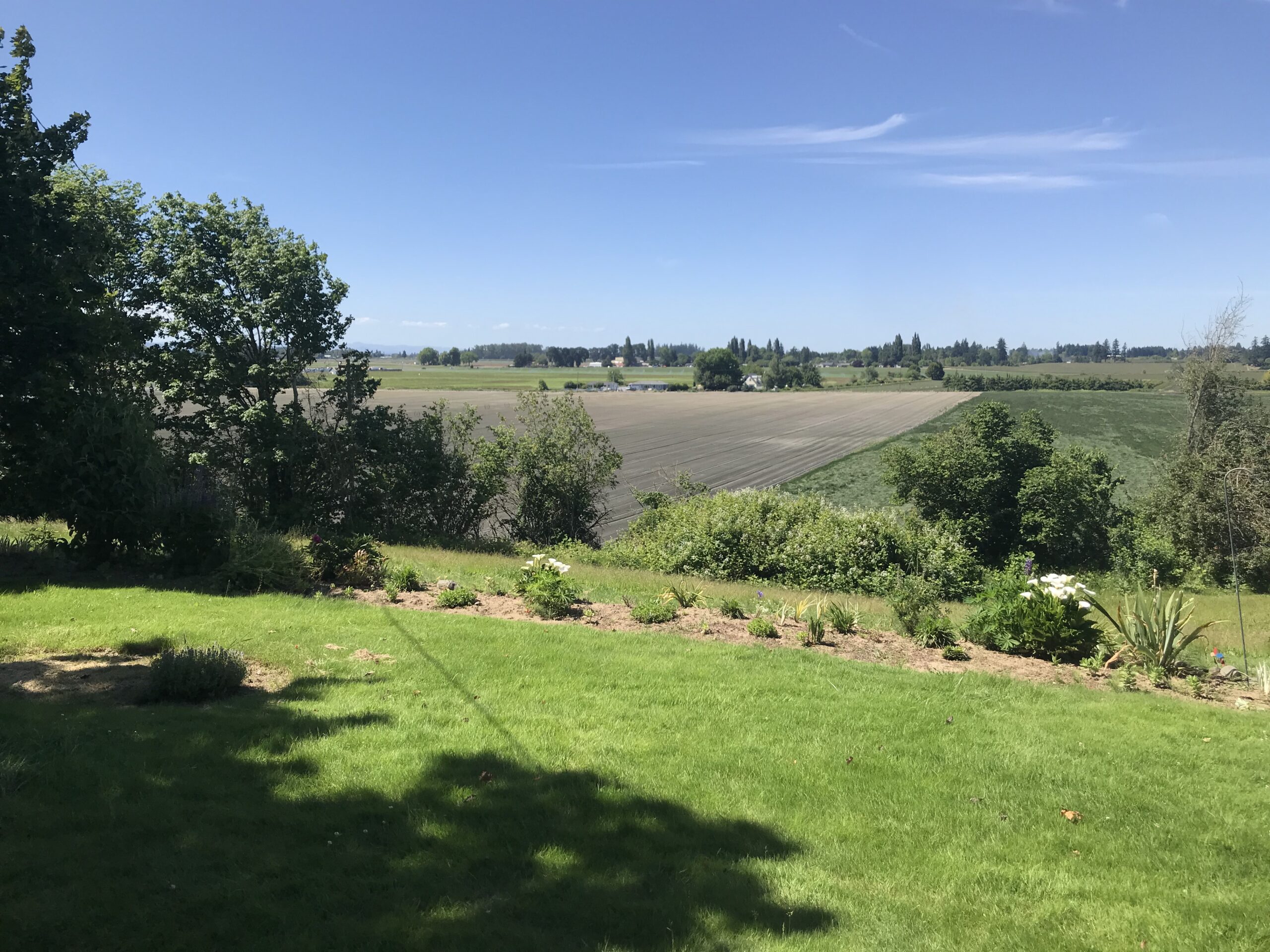
From a Land Specialist Who Works Marion County Farmland Every Week
Marion County sits at the heart of the Willamette Valley — Salem, Woodburn, Silverton, Stayton, Mount Angel, Gervais, and the farmland surrounding them make up some of the most productive agricultural ground in Oregon. If you own farmland here and you’re thinking about selling — whether it’s a working farm, EFU acreage you’ve leased out, or land you inherited — here’s what actually matters to get it sold at the right price.
Read more: Why You Need a Land Specialist in Salem, Oregon (Not Just Any Realtor)
Start with what kind of farmland you actually have
Marion County farmland isn’t one product. Before you can price or market it correctly, you need clarity on:
- EFU (Exclusive Farm Use) zoning status — this restricts use and building rights, but it’s also the zoning that protects the county’s core agricultural land and, in many cases, the zoning buyers specifically want if they’re planning to farm.
- Current farm deferral / special assessment status — if the land is currently taxed at the reduced farm-use rate, that status and its rules travel with the sale in ways both you and the buyer need to understand.
- Soil class and current use — row crops, grass seed, hazelnuts, berries, or pasture all appeal to different buyer types and support different pricing.
- Water rights — irrigated Marion County farmland commands a real premium over dry acreage, but only if the water right is properly certificated and documented.
Pricing Marion County farmland correctly
The single most common mistake I see is pricing farmland the way you’d price a house — using a rough per-acre number pulled from a general land website instead of true local comparables. Marion County farmland values vary significantly by soil class, water access, and proximity to Salem and I-5, and they don’t move in lockstep with residential home prices. A proper valuation looks at recent actual farmland sales in the immediate area — not statewide averages, which blend everything from desert range ground to premium valley soil and understate what quality Marion County ground is really worth.
Read more: How to Sell Land Through Probate in Oregon: A Step-by-Step Guide
Get ahead of farm deferral before you list
If your land has been under Oregon’s farm-use special assessment, selling it — especially to a buyer who won’t keep it in qualifying farm use — can trigger a significant back-tax bill. I’ve written a full breakdown of exactly how that calculation works in a separate article on farm deferral back taxes in Oregon. The key point for Marion County sellers: figure this out before you list, disclose it clearly, and structure the sale (or the buyer conversation) around it, rather than letting a buyer’s attorney discover it during escrow and use it to renegotiate your price.
Understand your tax picture before you set an asking price
Beyond farm deferral, a farmland sale in Marion County typically triggers capital gains tax, and the calculation depends heavily on how you acquired the property. If you inherited the farm, stepped-up basis can substantially reduce what you owe — I cover that in a separate article on inherited Oregon property. If you’re holding for investment purposes, a 1031 exchange may let you defer the gain entirely into replacement property. I map this out with every seller before we talk about a listing price, because your real number is what lands in your account after taxes, not the gross sale price.
Read more: Stepped-Up Basis on Inherited Oregon Property: How It Lowers Your Tax Bill
Who actually buys Marion County farmland
Buyers generally fall into a few groups, and understanding which one fits your parcel changes how you market it:
- Active farmers expanding operations — care most about soil quality, water rights, and adjacency to existing ground they farm.
- Hobby farm and lifestyle buyers — often want smaller acreage with a home site, closer to Salem or one of the surrounding towns, and care more about buildability than production capacity.
- 1031 exchange buyers — moving proceeds from another sale, often working on a tight closing timeline dictated by exchange rules.
- Institutional and investment buyers — evaluate the land primarily as a long-term asset and lease it back to an active farmer.
A generic listing reaches none of these buyer types particularly well. The marketing, photos, and information disclosed need to match who’s actually likely to buy this specific parcel.
What to have ready before you list
A current, accurate legal description and confirmed boundary — Marion County farmland that’s been in a family for decades sometimes has fence lines that don’t match the recorded description.
Documentation of water rights, if any.
Farm deferral status and a clear understanding of what disqualification would cost.
Recent farm income or lease records, if the land has been actively farmed or leased.
A realistic sense of your after-tax number, so you know what offers are actually worth accepting.
Read more: Capital Gains Tax on Oregon Land Sales: What You’ll Actually Owe in 2026
Why local, land-specific representation matters here
Marion County has enough farmland transaction volume that a specialist genuinely gets to see comparable sales other agents never encounter — and enough EFU-zoned acreage that understanding the zoning rules cold, rather than looking them up mid-transaction, makes a real difference in how smoothly a sale closes. I work Marion County farmland regularly alongside Clackamas, Washington, Polk, Yamhill, Linn, and Benton counties, so I’m not learning the local comps for the first time on your listing.
The towns and pockets I see the most activity in
Within Marion County, I see consistent buyer interest around Salem, Woodburn, Silverton, Mount Angel, Gervais, and Stayton, along with the farmland corridors along Highway 99E and 214. Each of these areas has its own character — Woodburn and Gervais lean toward row crop and nursery ground, the Silverton and Mount Angel foothills mix farmland with more rural residential interest, and land closer to Salem itself often draws buyers weighing farm use against future development potential near the Urban Growth Boundary. Knowing which of these dynamics applies to your specific parcel changes both the price and who we market it to.
Frequently asked questions
Do I need a buyer who’s actually going to farm the land?
Not necessarily — but if your land is currently receiving farm deferral tax treatment, whether the buyer keeps it in qualifying farm use affects whether back taxes get triggered at the sale. This is worth mapping out before you accept an offer.
How is Marion County farmland different from farmland elsewhere in the Willamette Valley?
The fundamentals are similar across the valley, but local factors — proximity to Salem, I-5 access, specific soil pockets, and local zoning history — mean Marion County comps should come from Marion County sales, not the valley as a whole.
Should I get a survey before listing?
If there’s any uncertainty about the boundary — very common on land held by the same family for generations — yes. It’s far better to resolve a boundary question before a buyer’s title company flags it during escrow.
What if multiple family members inherited the farm together?
This is common, and it works best with one point of contact coordinating price, timing, and buyer communication for the whole group. I cover the inheritance and probate side of this in separate articles if that applies to your situation.
Let’s talk about your Marion County farmland
I’ll walk your property, give you an honest current valuation based on real Marion County comparables, and map out what a sale would actually net you after taxes — before you decide anything.
About Al Cronemiller — Oregon Land Specialist, MORE Realty, Salem, Oregon. Started working timber with his father at age 12 — cruising timber, running property lines, building logging roads. His grandfather was Oregon State Forester in the 1930s and helped write Oregon’s reforestation bylaws; Cronemiller Lake near Corvallis is named after him. Al spent five years in the City of Salem survey department, owned a construction and remodeling company for 30 years as a licensed general contractor, and worked as a commercial property buyer for institutional hedge fund clients. He holds Land Specialist and Multi-Family Specialist designations and has spent 20+ years selling Oregon bare land, EFU farmland, timberland, and investment property.
This is Al Cronemiller, your Salem Oregon Bare Land Specialist. I always answer.
503-949-5025 | al@cronemiller.com | HomesForSaleSalemOregon.net
This article is educational and general in nature. It is not legal, tax, or financial advice — talk with a qualified attorney, CPA, or the Marion County Assessor’s office about your specific situation.
2 Responses