
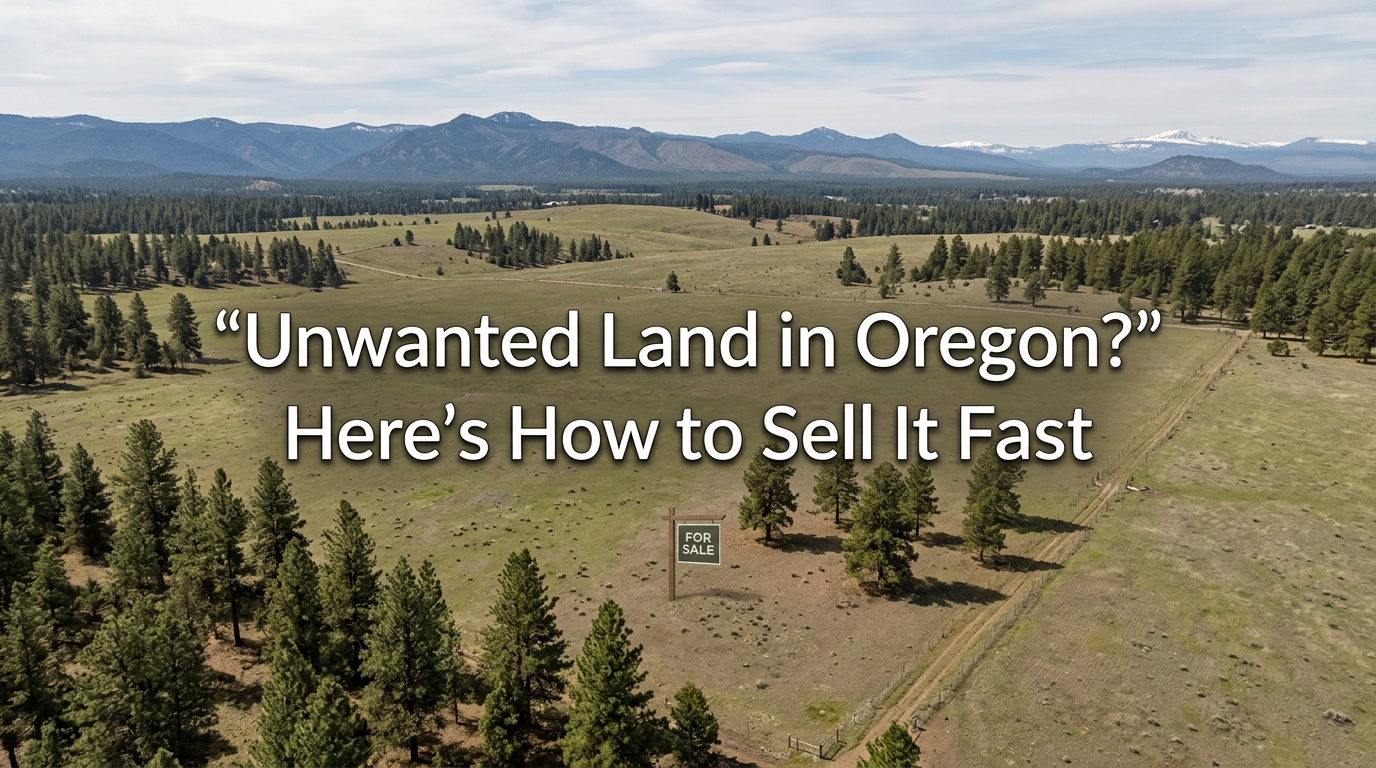
If you own a piece of land in Oregon that you no longer want, whether it was inherited, purchased years ago as an investment, or simply forgotten about, you already know the frustration. Vacant land does not sell itself, and it does not sell quickly. Unlike a house, land has a much smaller pool of interested buyers, which means owners are often left paying property taxes year after year on acreage that generates no income and creates ongoing stress.
In this article, I’ll explain why unwanted land is so hard to sell in Oregon, what your realistic timeline looks like, what the law requires you to disclose, and the fastest, least stressful paths to actually getting it sold.
Read more: How Do I Find Out If My Oregon Land Has Water Rights? (Step-by-Step Verification Guide)
Why Vacant Land Is Harder to Sell Than a House
Land buyers are a different market than home buyers. A house serves an immediate need: shelter. Land buyers, on the other hand, are usually searching for a very specific use, whether that is building a home, farming, timber production, or recreational use. That narrower demand is the main reason land sits on the market so much longer than residential property.
Add in Oregon specific factors like zoning restrictions under the state’s Exclusive Farm Use (EFU) rules, forest land classifications, water rights questions, and access or easement issues, and it becomes clear why so many land owners feel stuck. Most buyers need time to research buildability, utility access, septic feasibility, and road access before they are willing to commit, which slows the process even further.
Read more: Sell or Hold Oregon Bare Land? An Honest Financial Analysis (2026)
How Long Does It Actually Take to Sell Land in Oregon?
This is the number most land owners underestimate. According to the Oregon Association of Realtors, raw land in Oregon has taken an average of roughly 180 days to sell in recent years, and many rural or remote parcels take considerably longer. Traditional listings for raw land can realistically stretch from 6 months to as long as 2 years, particularly for larger acreage, timberland, or land in less populated counties.
By comparison, homes in Oregon typically go pending in around 6 to 7 weeks. Land moves at a fundamentally different pace, and that gap in expectations is exactly what catches most owners off guard.
Factors slows a land sale down:
- A smaller pool of qualified, motivated buyers
- Limited financing options, since many lenders will not finance raw land the way they finance homes
- Extended due diligence timelines for zoning, access, and utilities
- Title or boundary issues that surface during the sale process
- Remote or rural locations with less buyer traffic
What speeds a land sale up:
- Accurate, defensible pricing based on a professional evaluation rather than a guess
- Clear documentation of access, boundaries, and zoning upfront
- Working with a buyer or broker who understands Oregon land specifically, not just residential homes
- Considering a direct or cash sale path instead of a traditional listing
Read more: What Is Oregon’s Urban Growth Boundary? How It Affects Your Land Value
What Oregon Law Requires You to Disclose
Oregon treats vacant land disclosures differently than home sales. Unlike residential property, Oregon state law does not require a specific statutory disclosure form for every vacant land transaction. However, sellers still have a legal duty to disclose known material facts that would affect the property’s value or use, and if you are using a standard Oregon Association of Realtors Vacant Land Purchase and Sale Agreement, a signed disclosure statement is a contractual requirement.
Typical items Oregon land sellers should disclose:
- Known access or easement issues
- Zoning limitations or land use restrictions
- Wetlands, flood zone status, or environmental concerns
- Water rights and mineral rights information
- Any known boundary disputes or survey discrepancies
Even in situations where a formal disclosure is not strictly required by statute, providing one is strongly recommended. Failing to disclose a known material defect can expose a seller to legal liability well after closing, even if the buyer had the opportunity to do their own due diligence.
Your Options for Selling Unwanted Land in Oregon
1. List Traditionally with an Agent This route can maximize your sale price, but it comes with the longest timeline (often 6 months to 2 years for land specifically), plus commission costs, typically in the 5 to 6% range, and ongoing carrying costs like property taxes while you wait.
2. Sell By Owner (FSBO) This saves on commission but places the entire burden of marketing, disclosures, negotiation, and paperwork on you. Without specialized land marketing, FSBO land sales often take just as long, or longer, than working with an agent.
3. Sell to a Direct or Cash Land Buyer This is the fastest path, often closing in as little as 2 to 4 weeks, with no commissions and no marketing costs. The tradeoff is typically a lower sale price than what you might get with patient, well marketed traditional listing.
4. Reposition the Land Through a 1031 Exchange This option is worth serious consideration if your land has appreciated in value and you are not in urgent need of a fast cash payout. Rather than selling outright and losing a portion of the proceeds to capital gains tax, a 1031 exchange allows you to roll your land’s equity into an income producing property, tax-free, while finally putting that stagnant asset to work generating monthly cash flow. For many Salem area land owners, this ends up being the difference between land that has cost them money for years and a property that starts paying them instead.
Read more: What Disclosures Are Required When Selling Land in Oregon? (Everything Sellers Must Know)
A Faster, Less Stressful Path Forward
If your priority is speed above all else, a direct cash sale is the quickest way to offload land you no longer want. But if your land has real equity in it, and many parcels across Salem, Marion County, and the Willamette Valley do, it is worth pausing before accepting the first fast offer that comes in. A rushed cash sale can leave real money on the table, especially on appreciated timberland, agricultural acreage, or larger parcels.
Before deciding, it is worth getting a professional opinion on what your land is actually worth and what your realistic options are, whether that means a straightforward sale or a tax deferred exchange into an income generating property.
Frequently Asked Questions
How fast can I sell unwanted land in Oregon?
A direct or cash buyer can often close in 2 to 4 weeks. A traditional listing through an agent typically takes anywhere from 6 months to 2 years, depending on location, zoning, and buyer demand.
Do I have to disclose problems with my land before selling it in Oregon?
Yes. Oregon sellers have a duty to disclose known material facts that affect the property’s value or use, such as access issues, zoning restrictions, or environmental concerns, even when a formal statutory disclosure form is not strictly required for the transaction.
Is it better to sell land for cash or list it with an agent?
It depends on your priorities. A cash sale is faster but usually nets a lower price. A traditional listing can bring a higher price but requires more time, money for marketing, and patience through a longer closing timeline.
What if my land has increased in value since I bought it?
If your land has appreciated, selling it outright may trigger a significant capital gains tax bill. A 1031 exchange lets you defer that tax by reinvesting the proceeds into a qualifying income producing property instead.
I inherited land in Oregon and do not know what to do with it. Where do I start?
Start with a professional land evaluation to understand its current market value and income potential. From there, you can compare a straightforward sale against a 1031 exchange to see which path makes more financial sense for your situation.
Ready to Explore Your Options?
Whether you want to sell your unwanted Oregon land quickly or explore turning it into an income producing property through a 1031 exchange, the right first step is the same: find out what your land is actually worth.
503-949-5025 | al@cronemiller.com | HomesForSaleSalemOregon.net
Al Cronemiller | Oregon Land Specialist | MORE Realty | Salem, Oregon