
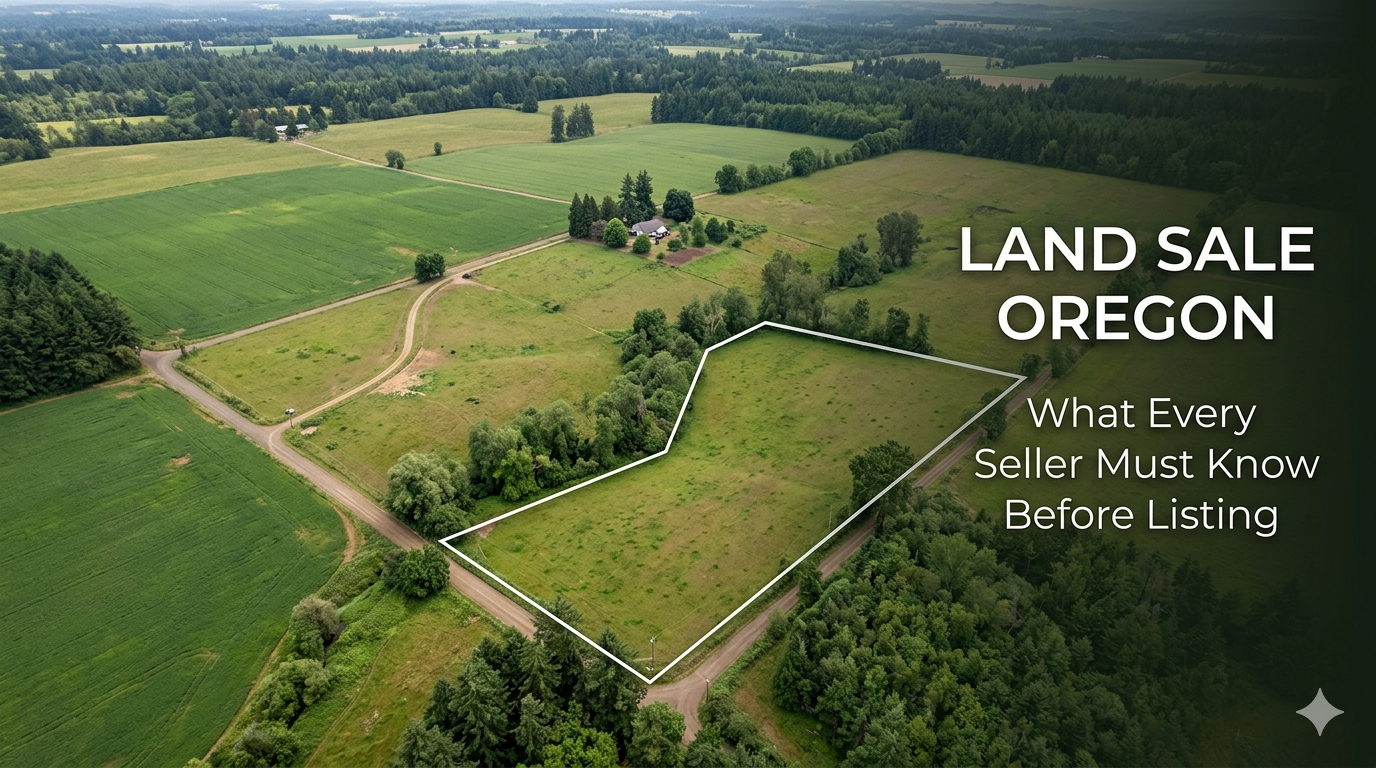
Selling Oregon land involves more than putting a property on the market, accepting an offer and waiting for the closing check.
Once a buyer makes an offer, several parts of the transaction begin moving at the same time. The purchase and sale agreement sets the terms of the deal. The buyer starts due diligence. Title and escrow work begins. You may have closing expenses to account for, and if the property has appreciated, the tax consequences can affect how much money you actually keep from the sale.
For Oregon landowners, these details can matter even more when the property includes timber, agricultural uses, water rights, multiple parcels, unusual access arrangements or other issues that require additional review.
Understanding the process before you sign a contract can help you avoid surprises later.
Read more: Sell or Hold Oregon Bare Land? An Honest Financial Analysis (2026)
The Purchase and Sale Agreement
Once you and the buyer agree on the basic terms, the purchase and sale agreement becomes the document that governs the transaction.
The agreement should spell out the important details rather than leave them open to interpretation. Depending on the property and the negotiated terms, this can include the purchase price, earnest money, due diligence period, contingencies, closing date and responsibilities of each party.
Purchase Price and Earnest Money
The contract should identify the agreed purchase price and explain how and when the buyer will deposit earnest money.
Earnest money is typically held according to the terms of the agreement and may be applied toward the buyer’s purchase at closing. The contract should also explain what happens to the deposit if the transaction does not close.
Due Diligence Period
Land buyers often need time to investigate the property before moving forward with the purchase.
The length of the due diligence period depends on the transaction. A property with complicated zoning, access, water rights or development considerations may require more investigation than a straightforward parcel.
The agreement should establish the due diligence period and identify any related contingencies.
Read more: How Do I Find Out If My Oregon Land Has Water Rights? (Step-by-Step Verification Guide)
Contingencies
A land purchase can include several contingencies. Depending on the deal, the buyer may want time to verify financing, zoning, permitted uses, boundaries, access, environmental conditions, water availability or other property characteristics.
These provisions can have a direct effect on whether the buyer can terminate the agreement or request changes before closing.
Closing Date and Extensions
The contract should establish when closing is expected to occur and whether either party has rights to extend the closing date under specific circumstances.
A well written agreement helps both sides understand what needs to happen and when.
Seller Disclosures and Property Information
Sellers should provide information they are required to disclose under applicable law and the terms of the transaction.
Land can involve issues that are less common in residential sales, so it is important to be accurate about what you know about the property. Questions about access, easements, water rights, wells, zoning, environmental conditions or other known matters should not be handled casually.
Read more: How Do I Avoid Capital Gains Tax When Selling Oregon Property? (Three Legal Tools That Work)
Review the Contract Before Signing
A contract is easier to negotiate before you sign it than after a dispute develops.
Review the purchase price, contingencies, deadlines, earnest money provisions, closing terms and other important conditions before accepting an offer. If you have questions about the legal meaning of a provision, consult an Oregon real estate attorney.
What Happens During Land Due Diligence?
After the contract is signed, the buyer typically begins investigating the property.
Due diligence gives the buyer an opportunity to determine whether the property matches the assumptions behind the purchase. What the buyer investigates will depend on the type of land and the intended use.
For an Oregon land sale, the investigation may include several areas.
Boundary and Title Review
The buyer may review the property’s legal description, title records, surveys and recorded documents.
This process can uncover easements, liens, ownership questions, restrictions or other matters that need to be resolved before closing.
A recent survey may also become important when property boundaries are uncertain or the buyer plans to develop the land.
Zoning and Permitted Uses
Zoning can significantly affect the value of Oregon land.
A buyer may want to know whether the property can be used for residential, agricultural, commercial, recreational or other purposes. They may also investigate development restrictions, minimum lot requirements and other local land use rules.
A property that looks attractive on paper may have limited uses under applicable zoning regulations.
Water Rights and Wells
Water can be an important part of an Oregon land transaction.
Depending on the property, the buyer may investigate water rights, well records, irrigation arrangements and other documentation related to water use.
Sellers should gather available records before the property reaches the due diligence stage. Missing documentation can create delays when a buyer is trying to verify an important part of the property.
Read more: What Is Oregon’s Urban Growth Boundary? How It Affects Your Land Value
Environmental Conditions
Environmental concerns can also affect a land transaction.
The buyer may investigate potential contamination, wetlands, flood risks, septic systems or other environmental matters depending on the location and proposed use of the property.
The level of investigation will vary from one property to another.
Timber and Agricultural Considerations
Timberland and agricultural property can require additional review.
A buyer may want information about timber resources, agricultural leases, crop use, access, irrigation, grazing arrangements or other rights connected to the property.
The more specialized the land, the more important it becomes to have relevant records available.
Roads, Access and Easements
Legal and physical access should be understood before closing.
Buyers may investigate whether the property has direct road access, access through an easement or other arrangements that affect how the land can be reached and used.
Access problems can become significant issues during a land transaction, particularly when the buyer has plans for development or another specific use.
Prepare Your Documents Before Due Diligence Begins
One way to make the process easier is to gather property records before the buyer asks for them.
Depending on your property, useful documents may include the deed, prior surveys, tax records, zoning information, water rights records, well documentation, easements, access agreements, timber information, agricultural leases and other relevant records.
You may not have every document, and not every property needs all of these records. The goal is to know what you have and identify potential issues early.
This can also give you an opportunity to address missing information before it becomes a closing problem.
Oregon’s Title and Escrow Process
Title and escrow are central parts of an Oregon real estate closing.
The title and escrow company helps coordinate the transaction, researches title and handles the funds and documents required for closing.
What Does the Title Company Do?
The title company generally reviews the property’s ownership history and recorded documents to identify issues that could affect the transaction.
Depending on the circumstances, this may include reviewing liens, easements, judgments and other encumbrances.
The title company may also issue title insurance according to the terms of the transaction.
What Happens in Escrow?
During escrow, the transaction’s money and documents are handled according to the agreement and closing instructions.
The escrow process can include collecting funds, coordinating documents, paying approved liens or other obligations and distributing the seller’s net proceeds after the transaction is completed.
The exact responsibilities and costs should be confirmed with the title and escrow company handling the closing.
Why Land Transactions Can Take More Coordination
A basic residential property can have a relatively familiar closing process. Land transactions can introduce additional issues.
Multiple parcels, complicated legal descriptions, water rights, timber interests, access easements, agricultural arrangements and unresolved liens can all require additional review.
That is one reason sellers should identify potential title or documentation issues early rather than waiting until the closing date.
What Does It Cost to Sell Land in Oregon?
The costs associated with selling Oregon land vary from transaction to transaction.
There is no single closing cost percentage that applies to every land sale. Your expenses depend on the property, purchase agreement, services involved and other circumstances.
Potential seller expenses can include:
Real estate commission: The amount depends on the listing agreement and negotiated terms.
Title and escrow charges: These vary according to the transaction and the services required. The purchase agreement may also determine how particular costs are allocated.
Property tax adjustments: Property taxes may be prorated or otherwise adjusted as part of the closing.
Lien and loan payoffs: Existing mortgages, liens, judgments or other obligations may need to be paid from the transaction proceeds.
Other transaction expenses: Surveys, document preparation, recording charges or other property specific costs may apply.
Before closing, review the estimated settlement statement so you understand the expected deductions from your sale proceeds.
Capital Gains Tax Is Part of the Selling Decision
One of the biggest financial questions for an owner of appreciated land is not the sale price. It is how much of that money may remain after taxes and transaction expenses.
If you sell investment property for more than your adjusted tax basis, the transaction may create a taxable gain. The actual calculation can depend on factors such as your basis, improvements, depreciation where applicable, selling expenses, holding period and individual tax circumstances.
Federal and Oregon tax rules can also interact in ways that make professional tax advice worthwhile.
That is why tax planning should begin before the sale closes, rather than after the money reaches your bank account.
Could a 1031 Exchange Apply?
If the land qualifies as real property held for investment or productive use in a trade or business, a Section 1031 exchange may allow you to defer recognition of qualifying gain when you acquire another qualifying property.
For example, an owner could potentially move from qualifying vacant land into another investment property.
The replacement property does not necessarily have to be the same type of real estate. Federal 1031 rules generally use a broad like kind standard for qualifying real property.
However, a 1031 exchange has specific requirements and deadlines. It is not something to arrange after the sale has already closed.
The 45 Day Identification Period
In a typical deferred exchange, the replacement property must be identified in writing within 45 calendar days after the transfer of the relinquished property.
The identification rules have specific requirements, so investors should work with a qualified intermediary before making assumptions about which properties will qualify.
The 180 Day Exchange Period
The replacement property generally must be received within 180 days after the transfer of the relinquished property, subject to the federal rules concerning the due date of the taxpayer’s return.
The 45 day identification period is part of the 180 day exchange period. It does not give you an additional 180 days after identification.
A 1031 Exchange Defers Tax Rather Than Erasing It
A 1031 exchange generally defers recognition of qualifying gain. It does not automatically eliminate the tax permanently.
The tax basis and future disposition of the replacement property matter, so the long term consequences should be discussed with a qualified tax professional.
Start Tax Planning Before You List
If you are considering a 1031 exchange, waiting until the closing date can create unnecessary problems.
A deferred exchange generally requires the use of a qualified intermediary and careful handling of the sale proceeds. The exchange structure needs to be established before the taxpayer receives the proceeds from the sale.
For that reason, it makes sense to discuss the possibility with your qualified intermediary and tax adviser before the property is sold.
Early planning can give you more time to consider replacement properties, understand the applicable rules and coordinate the sale with the purchase.
What Should Oregon Landowners Do Before Accepting an Offer?
Before signing a purchase and sale agreement, take the time to understand the transaction as a whole.
Review the proposed contract and its deadlines. Gather your property records. Identify potential title or access issues. Understand your expected selling expenses. Most importantly, consider the tax consequences before deciding how you want to structure the sale.
If you are considering a 1031 exchange, bring that conversation forward rather than treating it as an issue for the end of the transaction.
The sale price is only one part of the decision. What happens between accepting the offer and receiving your net proceeds can have a significant effect on the outcome.
Selling Oregon Land? Plan the Transaction Before Closing
Selling Oregon land can involve more moving parts than a typical property sale. The purchase agreement, buyer due diligence, title and escrow process, closing expenses and tax planning all deserve attention before the transaction reaches the closing table.
If you are preparing to sell land in Oregon, Al Cronemiller can help coordinate the real estate side of the transaction and connect the process with the professionals needed for title, escrow and tax planning.
For questions about the tax treatment of your specific sale or whether you qualify for a 1031 exchange, consult your CPA, tax attorney or qualified tax professional. A qualified intermediary should handle the exchange process when a 1031 transaction is being considered.
FAQs
What happens after I accept an offer on Oregon land?
After accepting an offer, the parties typically move forward under the terms of the purchase and sale agreement. The buyer may begin due diligence, while the title and escrow company works on title matters and prepares for closing. The exact process depends on the contract and the property.
What do buyers check during Oregon land due diligence?
Buyers may investigate boundaries, title, zoning, permitted uses, access, easements, water rights, wells, environmental conditions and other property specific issues. Agricultural, timber and development properties can require additional investigation.
How much does it cost to sell land in Oregon?
Seller costs vary based on the transaction. Potential expenses can include real estate commissions, title and escrow charges, property tax adjustments, lien payoffs and other transaction specific costs. There is no single closing cost percentage that applies to every Oregon land sale.
Does the seller pay title insurance in Oregon?
Who pays particular title and escrow costs depends on the purchase agreement and the customary practices involved in the transaction. Sellers should review the estimated settlement statement before closing so they understand their expected costs.
Do I have to pay capital gains tax when I sell Oregon land?
If the sale produces a taxable gain, capital gains and other applicable taxes may apply. The actual tax depends on factors such as your adjusted basis, holding period, income and the circumstances of the sale. A tax professional can calculate your potential liability.
Can I use a 1031 exchange when selling Oregon land?
Potentially. If the land is qualifying real property held for investment or productive use in a trade or business, a 1031 exchange may allow you to defer recognition of qualifying gain when acquiring another qualifying property. The exchange must follow specific federal requirements.
When should I start planning a 1031 exchange?
Ideally, before the sale closes. A deferred exchange requires careful handling of the transaction and sale proceeds. Contacting a qualified intermediary before closing gives you time to structure the exchange properly.
What documents should I prepare before selling Oregon land?
Depending on the property, useful records can include the deed, title information, surveys, tax records, zoning information, water rights documentation, well records, access or easement documents, timber or agricultural records and other relevant property information.
Get My Free Timberland Evaluation
503-949-5025 | al@cronemiller.com | HomesForSaleSalemOregon.net
Al Cronemiller | Oregon Land Specialist | MORE Realty | Salem, Oregon