
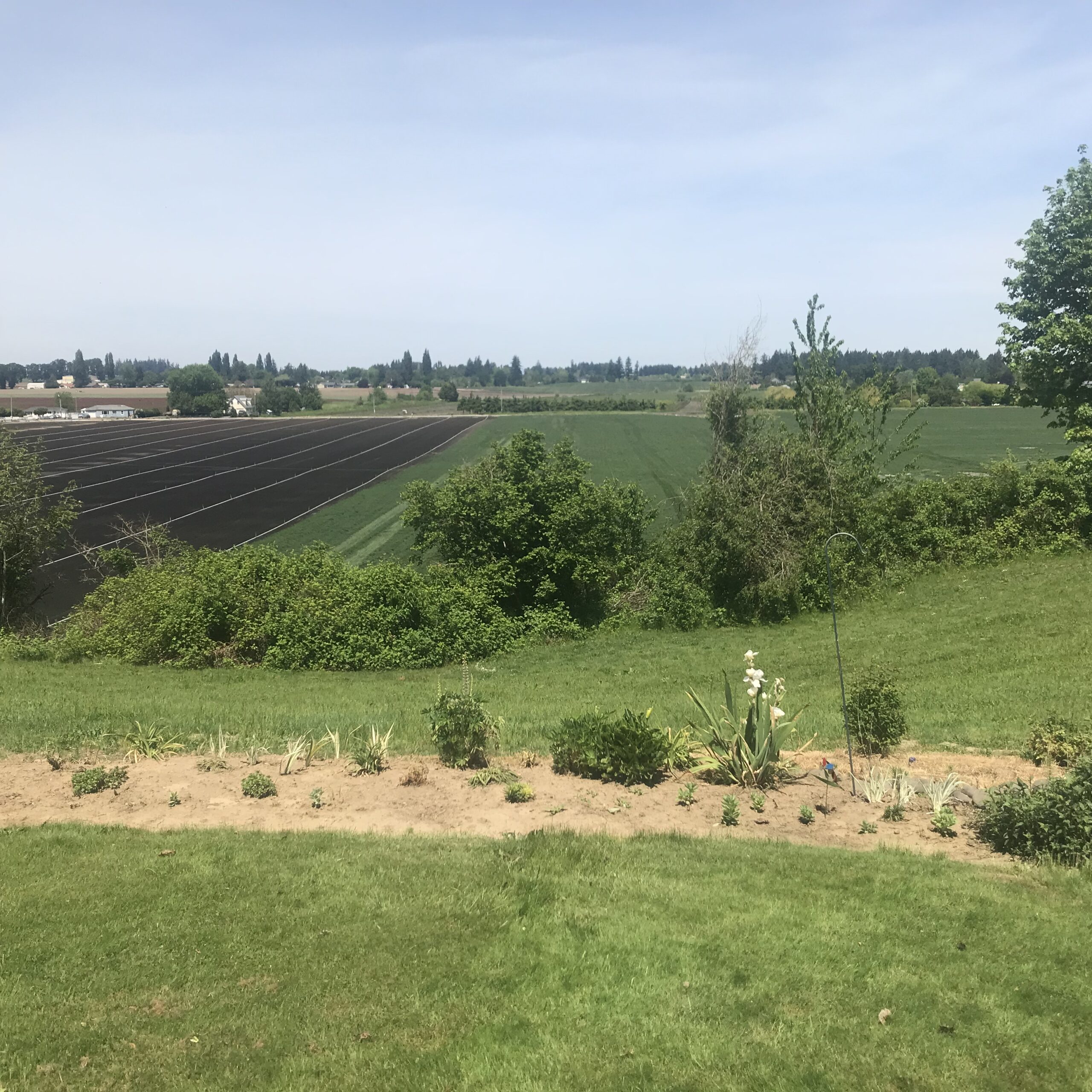
From a Former City of Salem Survey Department Land Specialist Who Tracks Oregon’s Urban Growth Boundaries
Two parcels can sit less than a mile apart, have similar soil and acreage, and still sell for very different prices. Often, a planning map line that many buyers have never heard of explains the difference. Oregon’s Urban Growth Boundaries (UGBs) draw a clear edge around every city. They separate land that can eventually support urban-density development from land that state law generally protects from that type of development. A parcel’s location relative to the UGB can significantly influence its value.
I spent five years in the City of Salem survey department and have sold Oregon bare land, EFU farmland, and timberland for more than 20 years. During that time, I’ve watched UGB discussions unfold at the county and city levels. I’ve seen how much speculative value buyers can attach to land near a boundary, and I’ve also seen how often that value doesn’t match what is actually likely to happen.
Read more: Conservation Easements on Oregon Farmland: What They Restrict and What They’re Actually Worth
What Is an Urban Growth Boundary in Oregon?
Since the 1970s, Oregon has required every city to draw and maintain an Urban Growth Boundary under the state’s statewide land use planning system.
Over time, cities plan to use land inside the UGB for urban development, including housing, commercial projects, and infrastructure. Outside the UGB, Oregon generally protects land for farming, forestry, or rural uses and does not allow cities to urbanize it simply because it sits close to the city.
This approach helps keep Oregon’s cities relatively compact. It also explains why farmland next to a city edge can look, to an untrained eye, like “obviously the next subdivision” when Oregon’s land use rules treat it very differently.
Why Land Just Outside a UGB Isn’t Automatically About to Be Developed
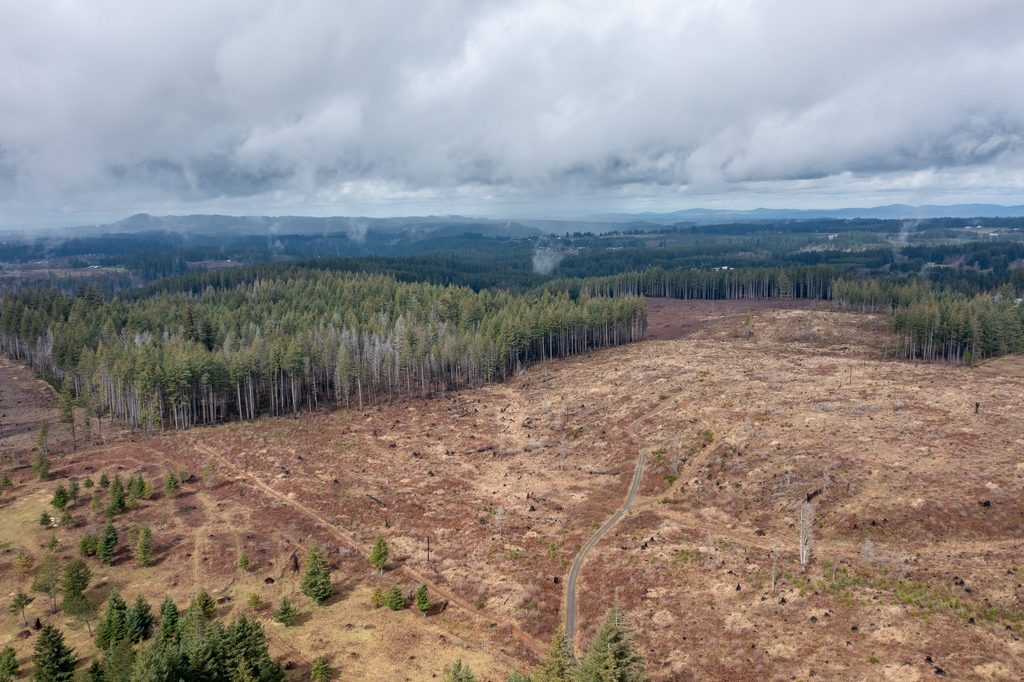
This is the single biggest misconception I run into. Buyers see rural land adjacent to Salem, Portland, or another city and assume it’s simply a matter of time before it’s pulled into the boundary and rezoned. In reality, UGB expansions are infrequent, heavily regulated, and go through a formal process involving the city, the county, and the state’s land use goals — they are not routine and not guaranteed, even for parcels that seem like an obvious fit. Pricing land based on an assumed future UGB expansion is pricing a possibility, not a fact, and that gap is exactly where buyers overpay.
Read more: Farm Deferral in Oregon: How Special Assessment Actually Works
How location relative to the UGB actually shows up in value
Land inside the UGB offers urban development potential, so buyers often pay dramatically more per acre than they would for comparable rural ground just across the line. Current zoning and infrastructure planning can support development at urban densities, which drives that higher value.
Land immediately outside the UGB can also command a premium, particularly when urban reserves or long-range planning identify the area as a possible future expansion zone. However, buyers should treat that premium as a probability, not a certainty, and base their valuation on the city’s actual growth plans rather than general optimism.
Land well outside any UGB or reserve area usually has no plausible path to urbanization. Buyers therefore value it based on its farm, timber, or rural residential potential, which typically provides a more stable and defensible valuation.
What actually moves a UGB
Cities periodically evaluate whether they have enough buildable land inside their boundary to accommodate projected population growth over a planning horizon, generally 20 years out. If a city can demonstrate a shortfall, it can propose an expansion — but the process involves specific criteria, public hearings, county coordination, and state review, and proposed areas don’t always make it in. Tracking a specific city’s most recent buildable lands inventory and growth management plan tells you far more about real expansion likelihood than a parcel’s distance from the line on a map.
Read more: EFU Zoning in Oregon: What Exclusive Farm Use Actually Restricts Before You Buy or Sell
Five things to check before pricing land near a UGB
- Confirm exactly where the current UGB line sits relative to the parcel — a boundary that looks close on a general map can be a meaningful distance away once you’re looking at the actual adopted boundary.
- Check whether the parcel or area has been identified in that city’s long-range or urban reserve planning as a candidate for future inclusion — this is public information, not guesswork.
- Understand current zoning on the parcel today, independent of any future hope — EFU, exception land, and rural residential all carry very different present-day value and use.
- Ask how recently that city’s UGB was last expanded, and how — some cities expand more actively than others, and history is a reasonable (though not guaranteed) indicator.
- Separate genuine infrastructure access (roads, sewer, water) from speculative rezoning potential. Infrastructure proximity has real, current value; assumed future rezoning does not, until it happens.
Where this plays out most in the counties I work
Around Salem, Keizer, Woodburn, Newberg, Canby, and Albany, buyers and sellers closely watch land just outside each city’s UGB, but they often price it very differently. Some parcels have a realistic chance of entering future planning discussions, while much of the land remains farm or timberland that may stay that way for decades. In many cases, sellers or buyers price these properties based on assumptions that the planning record does not support.
Read more: Oregon Timberland For Sale in the Willamette Valley: 2026 Buyer’s Guide
Why this needs a land specialist’s read, not a general one
A residential agent working inside city limits rarely deals with UGB questions at all. Pricing rural land accurately near a boundary means understanding both sides — the zoning, water, and access realities of the land as it sits today, and the actual, document-backed likelihood of it ever changing.
Frequently asked questions
Does land right next to a UGB automatically become more valuable over time?
Not automatically. It can carry a premium reflecting future potential, but that premium is speculative unless there’s documented planning activity supporting it — proximity alone isn’t evidence.
Can I request my land to include in the UGB myself?
Individual landowners generally can’t unilaterally trigger a UGB expansion. Expansion is a formal city and county planning process tied to demonstrated regional growth need, not an individual application.
If my land pull into a UGB, does it rezone automatically?
No — inclusion in the UGB is a separate step from actual rezoning and annexation, which typically follow later and involve their own processes, timelines, and requirements.
Is land outside a UGB a bad investment?
Not at all — it depends entirely on what you want from it. For farm, timber, or rural residential use, land outside a UGB is priced and evaluated on those merits, and plenty of buyers are specifically looking for land that will stay rural.
Get the real planning picture before you price the land
Whether you’re evaluating a parcel near Salem’s edge or anywhere else close to an Oregon UGB, I’d rather walk you through what that city’s actual growth planning says than let a map guess do the pricing for you.
About Al Cronemiller — Oregon Land Specialist, MORE Realty, Salem, Oregon. Started working timber with his father at age 12 — cruising timber, running property lines, building logging roads. His grandfather was Oregon State Forester in the 1930s and helped write Oregon’s reforestation bylaws; Cronemiller Lake near Corvallis is named after him. Al spent five years in the City of Salem survey department, owned a construction and remodeling company for 30 years as a licensed general contractor, and worked as a commercial property buyer for institutional hedge fund clients. He holds Land Specialist and Multi-Family Specialist designations and has spent 20+ years selling Oregon bare land, EFU farmland, timberland, and investment property.
This is Al Cronemiller, your Salem Oregon Bare Land Specialist. I always answer.
503-949-5025 | al@cronemiller.com | HomesForSaleSalemOregon.net
This article is educational and general in nature. It is not legal or land use planning advice — talk with the relevant city’s planning department or a land use attorney about your specific parcel.
One Response