
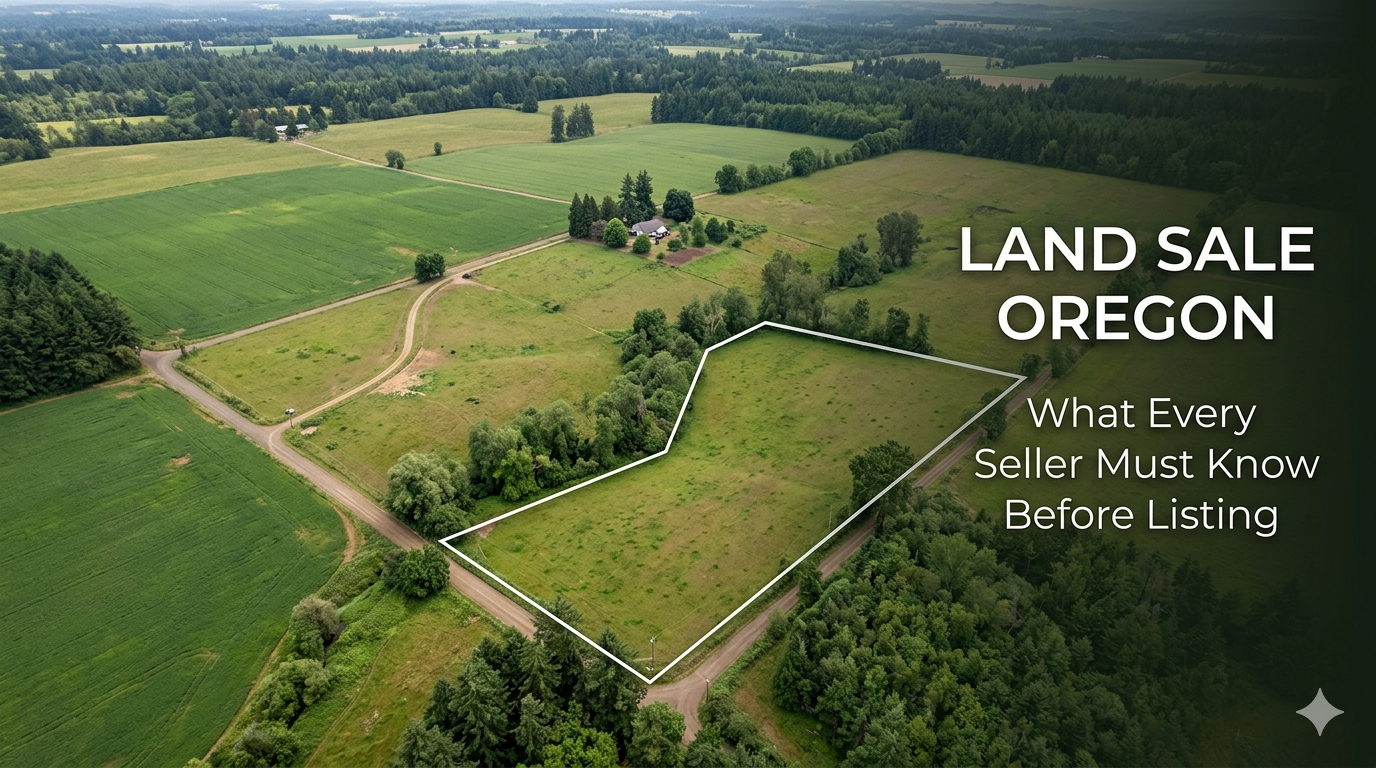
Land Sale Oregon: What Every Seller Must Know Before Listing
A land sale in Oregon is one of the most significant financial events most property owners will experience — and most sellers go into it without understanding the process. That gap in knowledge is where deals fall apart and money gets left on the table.
This guide covers everything: the contract, due diligence, Oregon’s title and escrow process, closing costs, and the tax strategy that belongs at the beginning of the conversation, not the end.
The Purchase and Sale Agreement
Once you accept an offer, the purchase and sale agreement governs everything. For Oregon land transactions, key provisions include:
Purchase price and earnest money — amount, form, and deposit timeline
Due diligence period — typically 30–60 days for land, longer than for homes
Contingencies — financing, inspection, zoning verification, survey
Closing date and any extension rights
Seller disclosures — what you know about the property must be stated clearly
Warning
Vague contract language creates disputes. I review every offer with my clients line by line to ensure your interests are protected before you sign anything.
The Due Diligence Period
During due diligence, the buyer investigates your land before committing fully. Oregon land buyers typically examine:
What Buyers Investigate During Oregon Land Due Diligence
Boundary survey & title — Critical
Zoning & permitted uses — Critical
Water rights & well records — Very important
Environmental review — Important
Timber/agricultural assessment — Important
Road access & easements — Very important
Sellers who provide a complete documentation package at the start of due diligence close faster and at better prices. Sellers who scramble to find documents lose buyer confidence — and sometimes the deal.
Oregon’s Title and Escrow System
Oregon is a title insurance and escrow state. Closings are handled by title companies — not attorneys. The title company:
Examines the chain of ownership and identifies liens or encumbrances
Issues title insurance to the buyer
Prepares closing documents and coordinates signing
Disburses all funds at closing — including payoff of any liens and your net proceeds
Land closings are more complex than residential closings when water rights, timber rights, or multiple parcels are involved. I work with title companies that specialize in Oregon land transactions.
What Sellers Pay at Closing
Closing Cost Item
Real Estate Commission
Typical Amount: 5–6% of sale price
Notes: Negotiable; covers buyer & listing agent
Title Insurance & Escrow
Typical Amount: $1,500 – $4,000+
Notes: Split by custom; depends on price
Prorated Property Taxes
Typical Amount: Varies
Notes: Your share through closing date
Lien Payoffs
Typical Amount: Varies
Notes: Back taxes, mortgages, judgments
Capital Gains Tax
Typical Amount: Up to ~30%
Notes: Deferrable via 1031 exchange
Capital Gains: The Number Most Sellers Ignore
Combined federal (up to 20%) and Oregon state capital gains taxes (up to 9.9%) can consume nearly 30% of your land’s appreciation.
A 1031 exchange defers this completely — but only if structured before closing. This is the conversation I have with every client before we list.
Key Numbers
30%
Max combined capital gains tax (federal + Oregon)
$0
Capital gains due with a properly executed 1031 exchange
180 Days
Time allowed to close on replacement property