
Capital Gains Tax on Oregon Land Sales: What You’ll Actually Owe in 2026
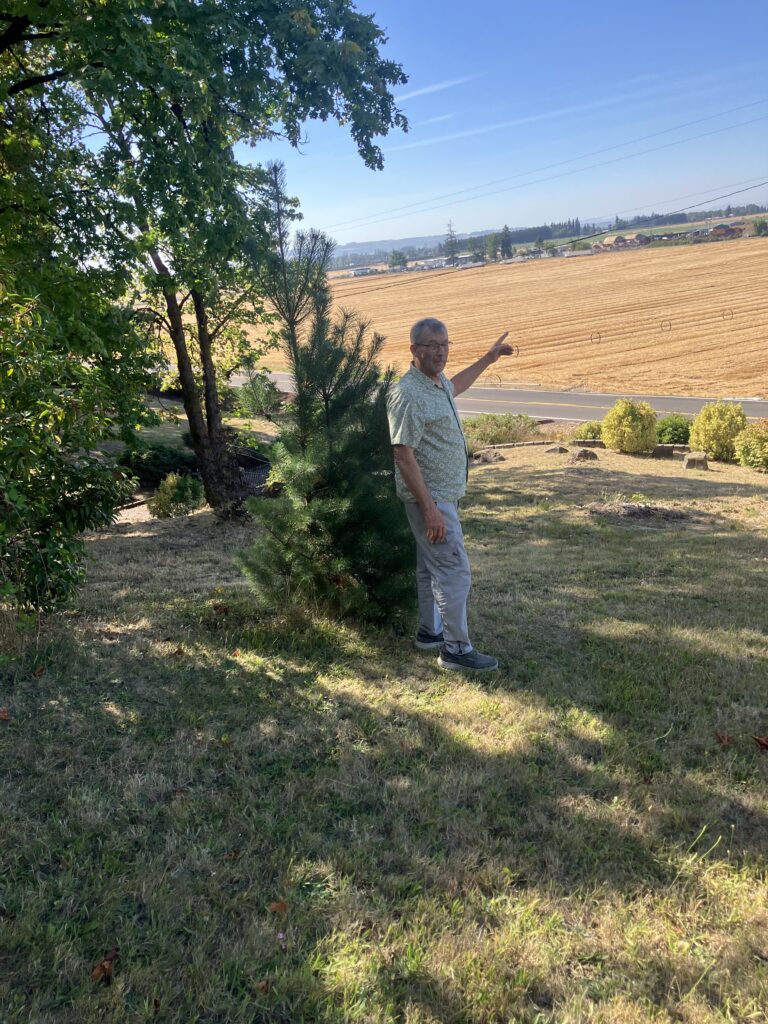
From an Oregon Land Specialist Who’s Helped Clients Structure Multi-Million-Dollar Land Sales, Including a $4M 1031 Exchange “How much am I going to lose to taxes?” is usually the very first question I get from a landowner thinking about selling — and it should be. Before you accept an offer, list a parcel, or start a 1031 exchange, you need a realistic picture of what capital gains tax on an Oregon land sale actually looks like. Here’s the straight version, in plain English, with the caveat up front that I am a land specialist, not a CPA — the numbers below are general education, and you should run your specific situation past a tax professional before you sell. Read more: Willamette Valley Farmland For Sale: What Buyers Need to Know Before You Buy in 2026 The two-layer tax you’re actually paying When you sell Oregon land for more than your cost basis, you owe tax at two levels: Federal long-term capital gains tax — if you’ve owned the land more than a year, your federal rate is 0%, 15%, or 20%, depending on your total taxable income for the year. Most landowners selling appreciated Oregon acreage land in the 15% or 20% bracket. Oregon state tax — this is the part that surprises a lot of sellers. Oregon does not have a separate, lower capital gains rate the way some states do. Plus, Oregon taxes capital gains as ordinary income, at Oregon’s regular income tax brackets, up to a maximum rate of 9.9%. Stack those together and a higher-income seller can be looking at combined federal-plus-state tax approaching 30% of the gain — meaningfully more than sellers expect if they’ve only thought about the federal number. Read more: Why Your Oregon Bare Land Isn’t Selling (And What to Do About It) A simple example (illustrative only) Say you bought 40 acres of Oregon bare land years ago for $120,000, and today it’s worth $420,000. Your gain is roughly $300,000. If you’re in a high federal bracket (20% long-term rate) and Oregon’s top rate applies to the gain, you could owe somewhere in the range of $85,000-$90,000 in combined federal and state tax on that sale — before any selling costs are factored in. Every number in that example changes based on your actual basis, your income, deductions, and whether any of the gain qualifies for special treatment, so treat it as illustrative, not a quote for your parcel. Read more: Willamette Valley Farmland For Sale: What Buyers Need to Know Before You Buy in 2026 What actually reduces the tax bill There are a handful of legitimate ways landowners lower what they owe on an Oregon land sale — this is where a good CPA earns their fee: Timing matters more than people think Whether you close in December or January can shift which tax year the gain lands in, which matters if your income is unusually high or low in one of those years. Whether you’ve owned the land more than 12 months determines if you get long-term rates at all — selling short-term land gets taxed as ordinary income with no preferential rate. None of this is something to figure out after you’ve already accepted an offer; it needs to be part of the conversation before you set a closing date. Why this matters for how you price and negotiate Understanding your real, after-tax number changes how you think about offers. A seller who only thinks in gross sale price can turn down a perfectly good offer chasing a higher number that, after taxes, actually nets them less than a 1031 exchange into replacement property would have. This is exactly why I walk every seller through the tax and exchange picture before we ever talk about listing price — the goal isn’t the biggest sale number, it’s the biggest number that actually lands in your account. Read more: What Is Oregon’s Urban Growth Boundary? How It Affects Your Land Value Selling costs also reduce your taxable gain It’s worth remembering that your taxable gain isn’t simply sale price minus purchase price. Selling costs — real estate commissions, title and escrow fees, and certain closing costs — generally reduce the amount subject to capital gains tax, the same way capitalized improvements to your basis do. Sellers who forget to account for this sometimes overestimate their tax bill and undervalue what a professionally marketed sale actually nets them versus a quick cash offer with a lower gross price but fewer costs offsetting the gain. Your CPA can walk through exactly which costs on your closing statement count toward this. Why sellers sometimes rush — and regret it I’ve seen sellers accept a fast cash offer specifically to “avoid the tax hit,” without realizing the tax calculation is largely the same regardless of who buys the land or how quickly it closes. The tax is driven by your gain, your income, and your holding period — not by whether you sold through a traditional listing or a quick cash buyer. Rushing a sale to dodge taxes that apply either way usually just means leaving money on the table from a lower sale price, without actually reducing what you owe. Frequently asked questions Does Oregon have a separate capital gains tax rate? No. Oregon taxes capital gains as ordinary income under the state’s regular income tax brackets, topping out at 9.9%. Do I owe capital gains tax if I inherited the land? Possibly much less than you’d think, because of stepped-up basis. See my separate article on inherited Oregon property for the full explanation. Can I avoid capital gains tax entirely? A properly structured 1031 exchange defers (not eliminates) the tax by rolling proceeds into replacement property. Full elimination generally only happens through specific circumstances like certain inherited-property situations or if the gain falls within the 0% federal bracket. Should I talk to a CPA before or after I list my land? Before. The tax and exchange strategy can affect your asking price,
Why Your Oregon Bare Land Isn’t Selling (And What to Do About It)
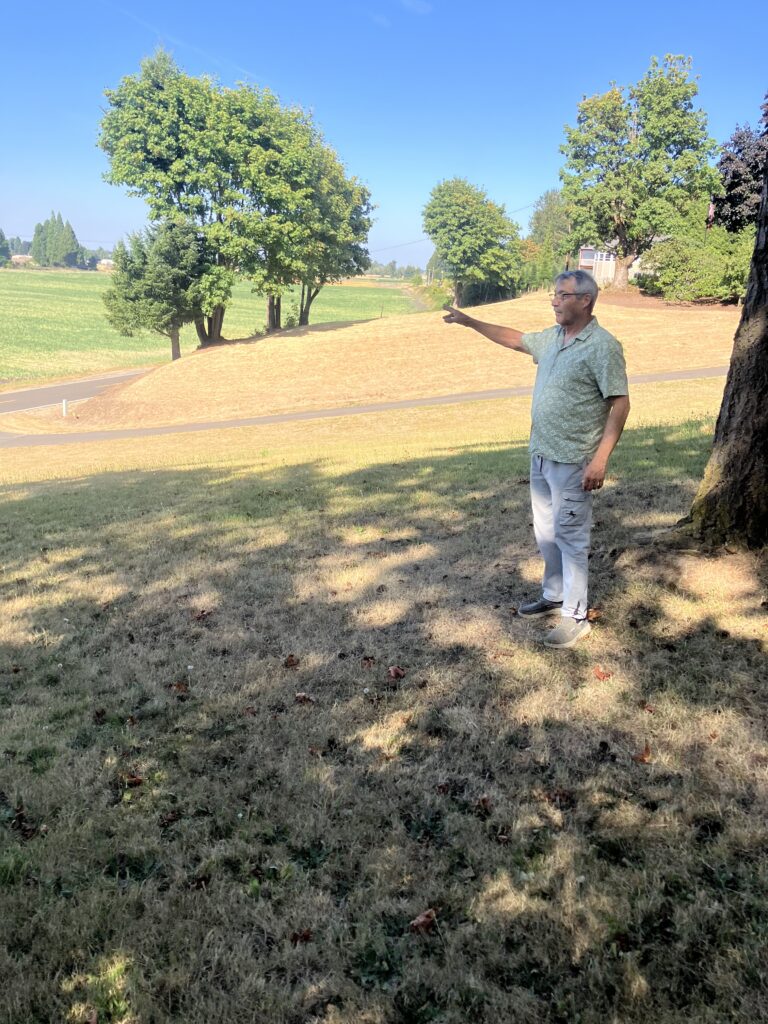
From a Land Specialist and 30-Year Licensed General Contractor Who’s Sold Oregon Land for 20+ Years If you’ve had a parcel of Oregon bare land sitting on the market for months — or you’ve tried to sell it before and gave up — you’re not doing anything unusual. Bare land is a fundamentally different sale than a house. It moves slower, it attracts a smaller buyer pool, and it gets marketed wrong far more often than homes do. In my 20+ years selling Oregon bare land, EFU farmland, and timberland, I’ve walked into almost every version of “why isn’t this selling,” and it almost always comes down to one of six things. More About Me Why Your Oregon Bare Land Isn’t Selling 1. It’s priced off the wrong comparables The biggest reason bare land sits on the market is that sellers price it using home sale logic or a generic per acre figure from a national land website instead of using comparable local land sales. Land value depends on factors that home appraisals often overlook, including zoning, soil class, water rights, access, and buildability. Two ten acre parcels located half a mile apart can have very different values if one has EFU restrictions and no legal access while the other has road frontage and a septic approved building site. If you set your listing price using a Zillow style algorithm or a quick comparable search, you may have identified the first major problem. Learn more: How Do I Find Out If My Oregon Land Has Water Rights? (Step-by-Step Verification Guide) 2. Buildability was never confirmed — or never disclosed This is the one that kills deals late, after months of “interest” that never turns into offers. Buyers who are seriously looking at bare land almost always want to know: can I build here? That means: If your listing doesn’t answer these questions up front, serious buyers move on to a parcel that does — and you never even hear from them. 3. The marketing treated it like a house Land buyers search differently than home buyers, and they need different information. A listing with one blurry photo of a field and a description that says “beautiful acreage, great potential” tells a buyer nothing they can act on. What sells bare land is an aerial or drone shot showing the actual boundary and terrain, a soil map, a clear statement of zoning and permitted uses, water rights status, and — critically — distribution to land-specific buyer pools, not just the general residential MLS feed most agents rely on by default. 4. It’s carrying farm deferral and nobody explained what that means to a buyer If your land qualifies for Oregon’s farm use special assessment, which reduces property taxes for qualifying farmland or forestland, that status can add real value. However, it can also scare off buyers who do not understand the program. Worse, a sale can disqualify the land and leave the buyer with a back tax bill after closing. I cover exactly how that back-tax calculation works in a separate article, but the short version for sellers is: get ahead of this in your listing instead of letting a buyer’s attorney discover it during due diligence. Read more: Sell or Hold Oregon Bare Land? An Honest Financial Analysis (2026) 5. Title or boundary issues are sitting quietly in the background Rural Oregon parcels, especially those that families have owned for decades, often contain old mineral reservations, easements that owners never formally released, or fence lines that do not match the recorded legal description. These issues rarely stop a sale when sellers identify and address them early. They absolutely are deal-killers when a buyer’s title company flags them three weeks into escrow and the buyer walks. Having spent five years in the City of Salem survey department and growing up in a land surveying family, this is the first place I look on any listing I take. 6. The pool of buyers who’d actually want this specific parcel was never reached Land buyers are a niche audience: hunters, hobby farmers, timber investors, builders, 1031 exchange buyers, and people planning to build a homestead. They don’t all search the same places, and they respond to different things — a builder cares about buildable acreage and utilities, a timber buyer cares about board-foot volume and access for equipment, a 1031 buyer cares about like-kind qualification and closing timeline. A generalist listing approach reaches none of them well. A land-specific approach — the right photos, the right facts, the right distribution — reaches all of them. Read more: Willamette Valley Farmland For Sale: What Buyers Need to Know Before You Buy in 2026 What Actually Fixes a Stale Bare Land Listing If your parcel has been sitting, here’s the order I work through with a seller: Re-verify the comps with actual recent land sales — not home sales, not national averages. Run buildability and access down to a documented answer, so it can be stated as fact in the listing, not left as a question mark. Check farm deferral, tax-lot, and title status so nothing surprises a buyer’s attorney later. Rebuild the marketing around what land buyers actually need to see — boundary maps, zoning, water rights, access, and honest photos of the actual terrain. Get it in front of the specific buyer type this parcel fits — timber buyer, farm buyer, builder, or 1031 exchange buyer — instead of a generic listing feed. Most of the time, land that’s “not selling” isn’t actually unsellable. A quick gut-check before you assume the worst If you’re wondering whether your land is simply unsellable, it helps to separate the parcel from the process. A landlocked, unbuildable, badly zoned parcel is genuinely a harder sell — but that’s rare. Far more often, I find perfectly good land that’s simply never had its buildability confirmed, never been shown to the right buyer pool, or never had its price checked against real land comps. Before you assume there’s something fundamentally wrong with
What Is Oregon’s Urban Growth Boundary? How It Affects Your Land Value
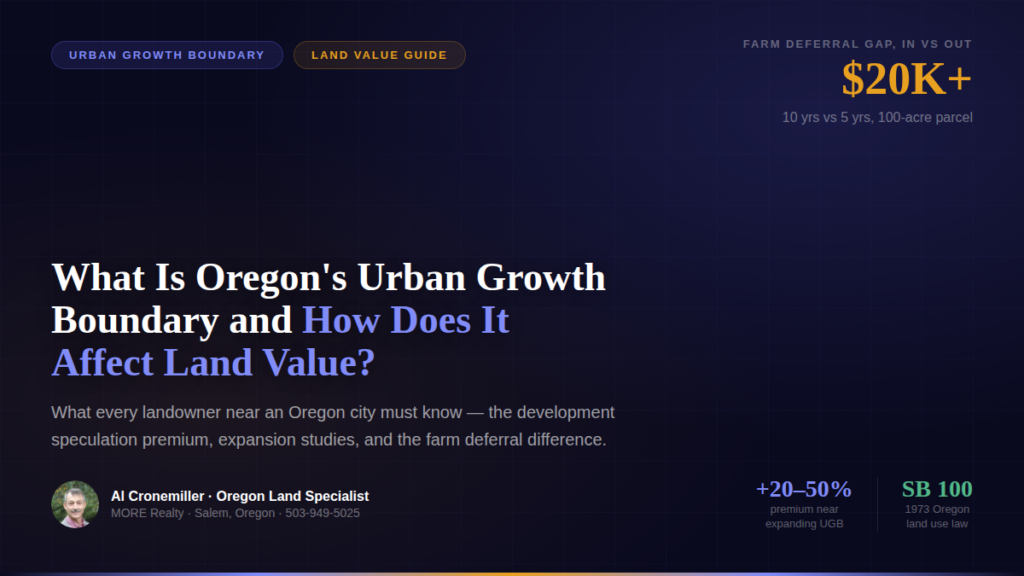
Urban Growth Boundary: What Oregon’s Urban Growth Boundary is, how it affects land value near expanding cities, and the farm deferral tax difference on either side of it.
What Disclosures Are Required When Selling Land in Oregon? (Everything Sellers Must Know)
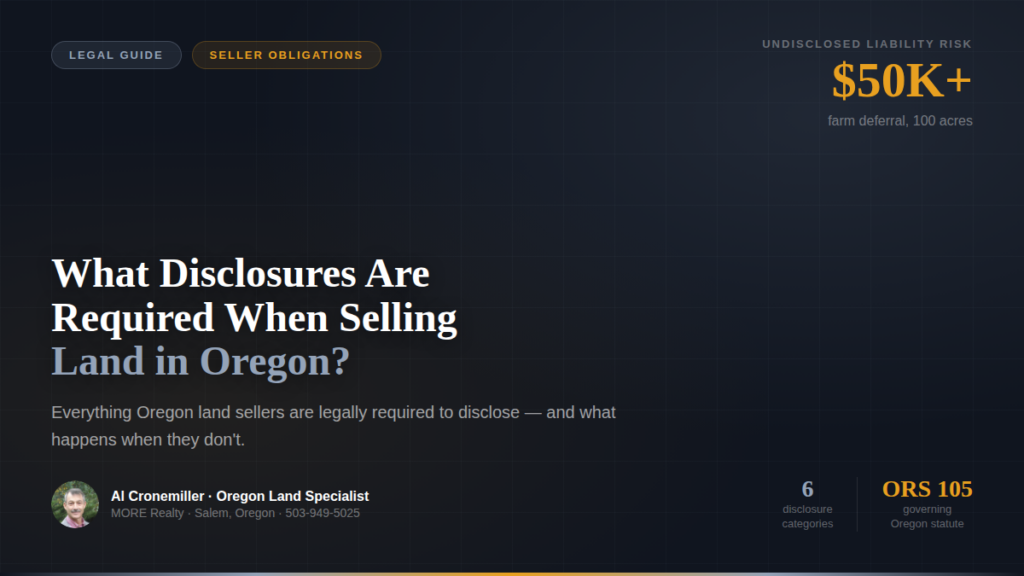
Disclosures: Everything Oregon land sellers are legally required to disclose under ORS Chapter 105 — and what happens when they don’t.
Sell or Hold Oregon Bare Land? An Honest Financial Analysis (2026)
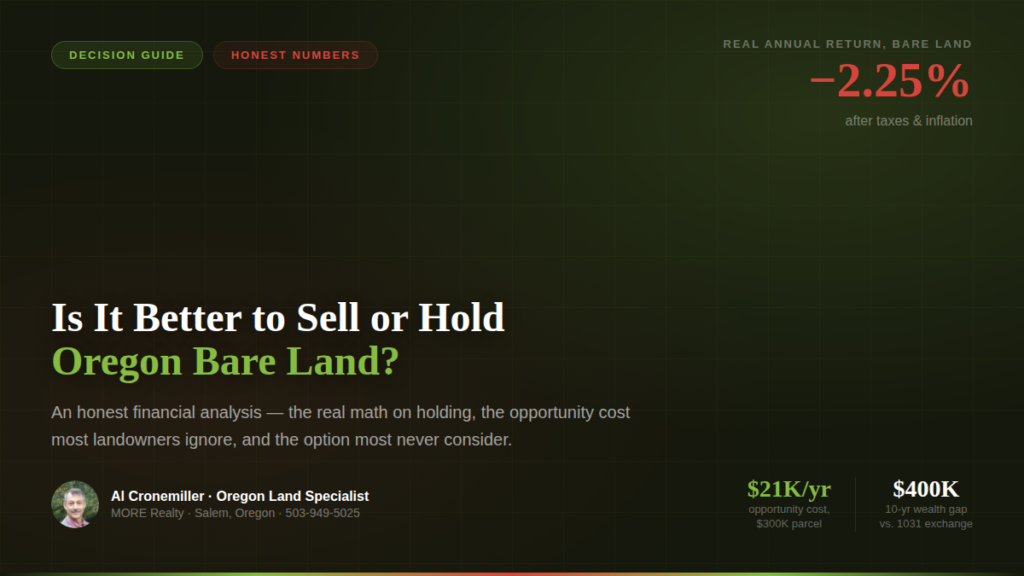
Sell or Hold: An honest financial analysis of holding vs. selling Oregon bare land, including the real math most landowners have never run.
How Do I Find Out If My Oregon Land Has Water Rights? (Step-by-Step Verification Guide)

Water Rights: A step-by-step guide to checking whether your Oregon land has water rights, using OWRD’s free public database — before you buy, sell, or price anything.
How Do I Avoid Capital Gains Tax When Selling Oregon Property? (Three Legal Tools That Work)
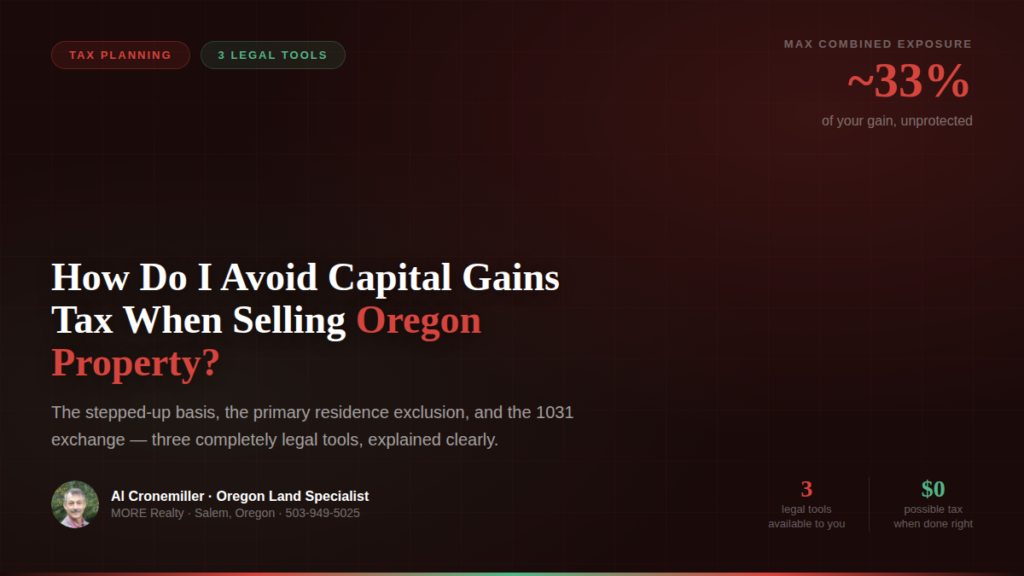
Capital Gains Tax: Three completely legal tools — the stepped-up basis, the primary residence exclusion, and the 1031 exchange — to reduce or eliminate capital gains tax on Oregon property.
Land Specialist vs Real Estate Agent in Oregon: What Bare Land Owners Need to Know
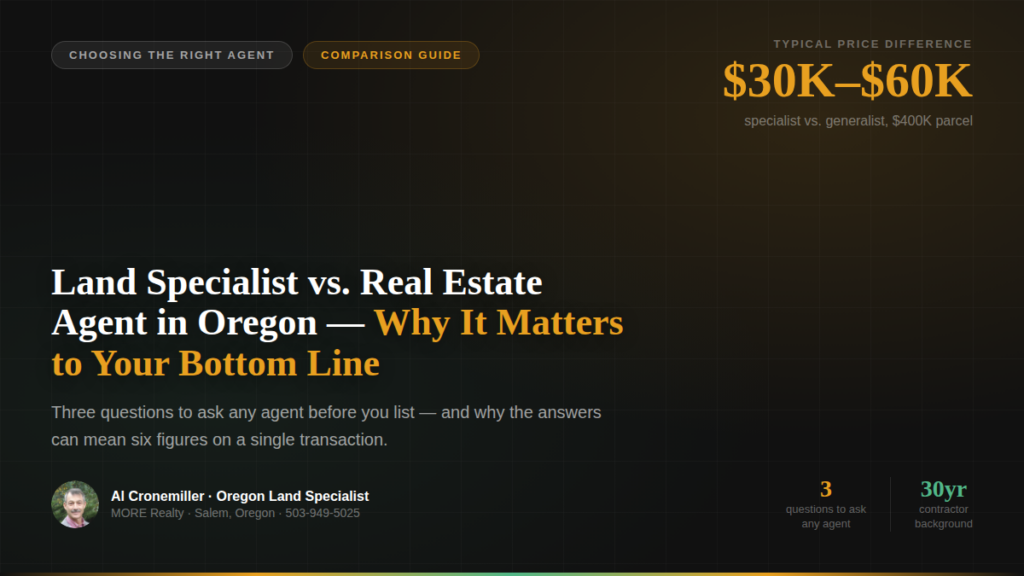
Specialist vs Agent: Why the difference between a land specialist and a residential agent can mean $30,000–$60,000 on a single Oregon land sale — and three questions to ask before you list.
What Is My Oregon Land Worth Right Now? (How Value Is Determined in 2026)

Land Value: Why automated tools get Oregon land value wrong, current 2026 market ranges by category, and the five variables that move value most.
What Is EFU Zoning in Oregon and Can I Build on It?
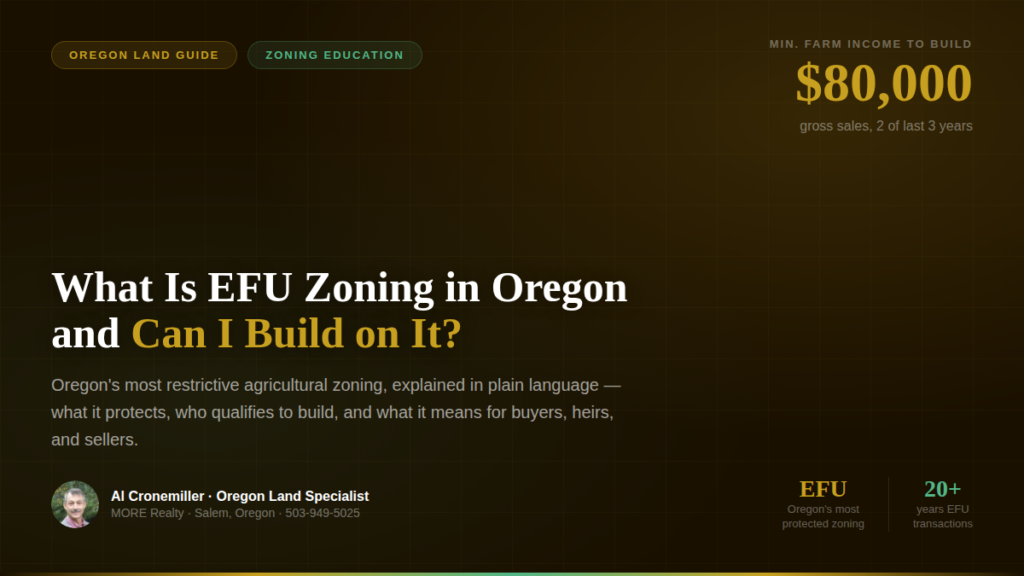
EFU Zoning: Oregon’s most restrictive agricultural zoning explained — what EFU land protects, who actually qualifies to build a home on it, and what it means for buyers, heirs, and sellers.