
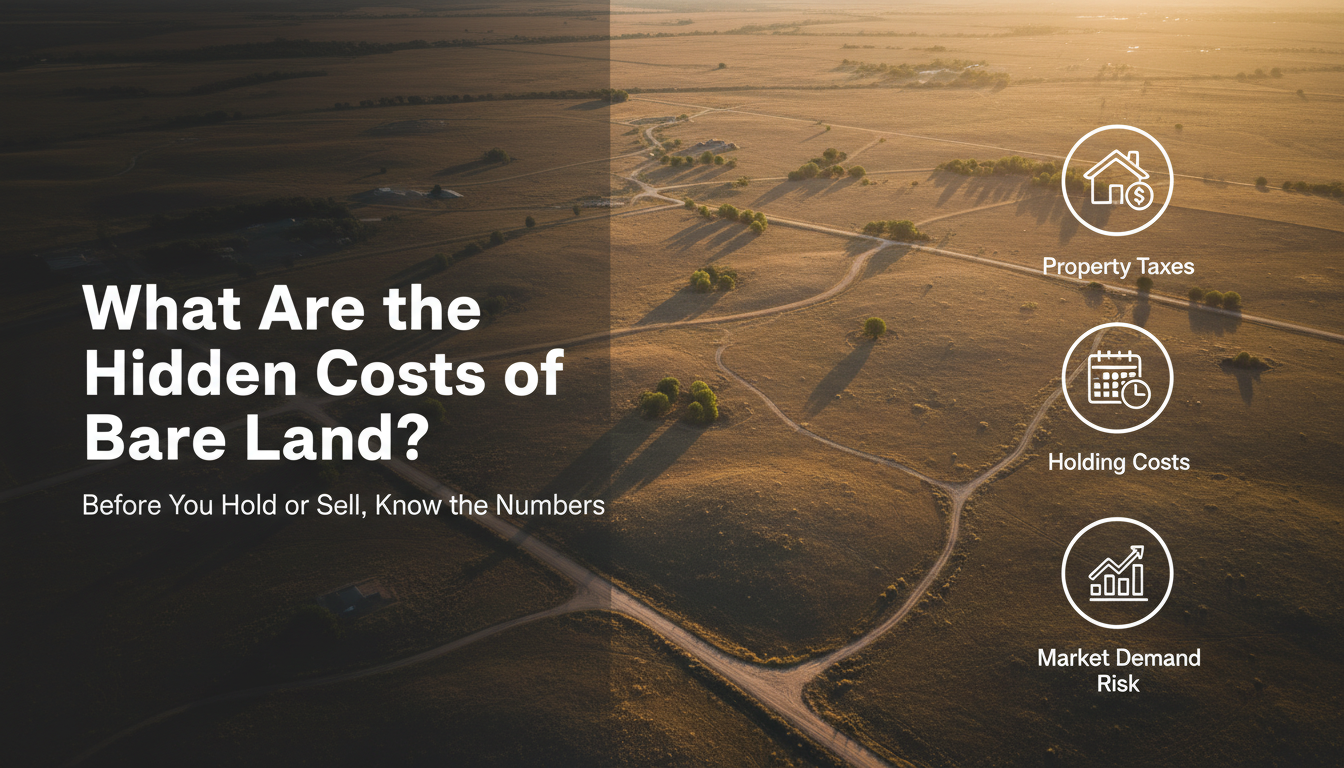
What Are the Hidden Costs of Owning Vacant Land in Oregon?
________________________________________
What Are the Hidden Costs of Owning Vacant Land in Oregon?
Owning vacant land in Oregon may seem simple and low maintenance, but there are often hidden costs that reduce long-term financial performance.
Unlike rental or commercial property, vacant land typically produces no income. However, expenses continue.
The most overlooked costs include:
• Property taxes
• Opportunity cost
• Liability exposure
• Maintenance and access expenses
• Regulatory and zoning limitations
• Inflation erosion
Understanding these hidden costs is essential before deciding to hold land long term.
________________________________________
Property Taxes Continue — Even Without Income
All real property in Oregon is subject to property tax.
Vacant land does not receive special exemptions simply because it produces no income.
Depending on county, zoning, and assessed value, property taxes can represent a meaningful annual expense.
Over 10 years, cumulative tax payments may equal a significant percentage of the property’s original purchase price.
Even modest annual tax obligations compound over time.
________________________________________
Opportunity Cost: The Most Overlooked Expense
Opportunity cost is often the largest hidden cost of owning vacant land.
Capital tied up in land is capital not invested elsewhere.
For example:
If $300,000 is invested in vacant land with minimal appreciation, that capital is unavailable for:
• Income-producing rental property
• Commercial real estate
• Dividend-producing investments
• Business expansion
Even moderate income-producing property may generate consistent annual return while land produces none.
Over 10–20 years, the difference between income-producing assets and appreciation-only land can become substantial.
Opportunity cost is invisible — but powerful.
________________________________________
Inflation Erodes Purchasing Power
Landowners often focus on appreciation without accounting for inflation.
If land increases in value at 2–3% annually, but inflation averages near that range, real purchasing power does not increase significantly.
Without income, appreciation must exceed inflation consistently to create real growth.
Otherwise, value growth may simply maintain purchasing power rather than expand it.
This is a major hidden cost rarely discussed in casual land investment conversations.
________________________________________
Liability Exposure
Even vacant land carries liability risk.
Potential issues include:
• Trespassing injuries
• Environmental hazards
• Fire exposure
• Unsecured access
• Illegal dumping
Landowners may need liability insurance coverage depending on property use and accessibility.
If the property has known hazards or is accessible to the public, risk increases.
Liability exposure may be low — but it is not zero.
________________________________________
Maintenance and Access Costs
Vacant land is not always “set it and forget it.”
Common maintenance expenses include:
• Brush clearing
• Fence repair
• Gate installation
• Road grading
• Erosion control
Properties in rural Oregon may require private road maintenance or shared access agreements.
Access disputes can also require survey work or legal clarification.
Over time, even minimal upkeep costs add up.
________________________________________
Regulatory and Zoning Restrictions
Oregon has structured land use regulations that affect development potential.
Land may be limited by:
• Urban growth boundaries
• Exclusive Farm Use (EFU) zoning
• Forest zoning
• Wetland designation
• Environmental overlays
These restrictions can reduce resale flexibility.
Landowners who assume they can subdivide or build later may discover limitations after purchase.
Regulatory limitations can significantly influence long-term performance.
________________________________________
Limited Liquidity
Vacant land typically takes longer to sell than improved property.
During market slowdowns:
• Financing becomes harder to obtain
• Buyer demand declines
• Marketing time increases
Extended selling periods increase holding costs.
Liquidity is a hidden factor that affects real-world performance.
________________________________________
Emotional Holding vs Financial Strategy
Many landowners hold property based on emotion rather than strategy.
Common beliefs include:
“I’ll wait until the market improves.”
“It doesn’t cost much to hold.”
“Land is always safe.”
While these beliefs may feel reasonable, they often ignore cumulative cost factors.
Holding without a defined timeline or exit plan increases exposure to hidden expenses.
________________________________________
Comparing Hidden Costs: Land vs Rental Property
Vacant Land:
• No income
• Ongoing taxes
• Opportunity cost
• Speculative appreciation
Rental Property:
• Monthly cash flow
• Tax deductions
• Mortgage amortization
• Appreciation
Income-producing property offsets expenses with revenue.
Vacant land does not.
This difference is central to long-term performance.
________________________________________
When Hidden Costs Are Justified
Vacant land may justify holding costs when:
1. Clear Development Plan Exists
Subdivision, partition, or construction within a defined timeframe.
2. Agricultural or Timber Income
Active lease or harvest cycle generating revenue.
3. Strategic 1031 Exchange Positioning
Temporary hold before repositioning into income-producing property.
4. Portfolio Diversification
Part of a broader, balanced investment strategy.
Without one of these factors, hidden costs may outweigh benefits.
________________________________________
Can a 1031 Exchange Reduce Land Holding Costs?
For investment property owners, a 1031 exchange may offer a repositioning strategy.
A properly structured 1031 exchange allows:
• Sale of investment land
• Deferral of capital gains tax
• Reinvestment into income-producing property
This strategy shifts the asset from appreciation-only to income-based performance.
However, strict timelines and qualification requirements apply.
Each situation requires professional evaluation.
________________________________________
Evaluating Land in Salem and the Willamette Valley
In Salem and surrounding areas, hidden costs may vary based on:
• Proximity to city services
• Development potential
• Timber valuation
• Road access
• Zoning restrictions
Urban fringe properties may carry different cost structures than rural acreage.
Accurate evaluation requires understanding local regulations and market conditions.
________________________________________
Frequently Asked Questions
1. What is the biggest hidden cost of owning vacant land?
Opportunity cost is often the largest long-term expense.
2. Does vacant land cost less to hold than rental property?
Land may require less management, but it produces no income to offset expenses.
3. Can property taxes increase over time?
Yes. Assessed values and local tax rates may change.
4. Is land maintenance required?
In many cases, yes — especially for access, safety, or regulatory compliance.
5. When does holding land make financial sense?
When income, development, or structured strategy offsets holding costs.
________________________________________
Final Analysis
Vacant land in Oregon carries more costs than many owners realize.
Property taxes, opportunity cost, inflation, liability exposure, maintenance, and regulatory restrictions all influence long-term performance.
While land can be strategic under the right circumstances, holding land without income or a defined plan often results in underperformance.
Clear evaluation allows landowners to make informed decisions about whether to hold, develop, or reposition property.
Understanding hidden costs is the first step toward smarter land strategy.
How to Value Bare Land in Salem Oregon Accurately