
How to Value Bare Land in Salem Oregon Accurately
Valuing bare land in Salem, Oregon is very different from valuing a house.
There are no bedrooms to compare.
No square footage adjustments.
No kitchen upgrades.
Instead, land value depends on:
Zoning
Location
Access
Utilities
Development potential
Market demand
Accurate land valuation requires understanding local regulations and realistic use potential —
not just looking at nearby listings.
This guide explains how to evaluate bare land in Salem Oregon properly.
Step One: Understand the Zoning
Zoning is the foundation of land value.
In Salem and surrounding areas, zoning determines:
Whether you can build
What type of structure is allowed
Density limits
Subdivision potential
Agricultural or forest restrictions
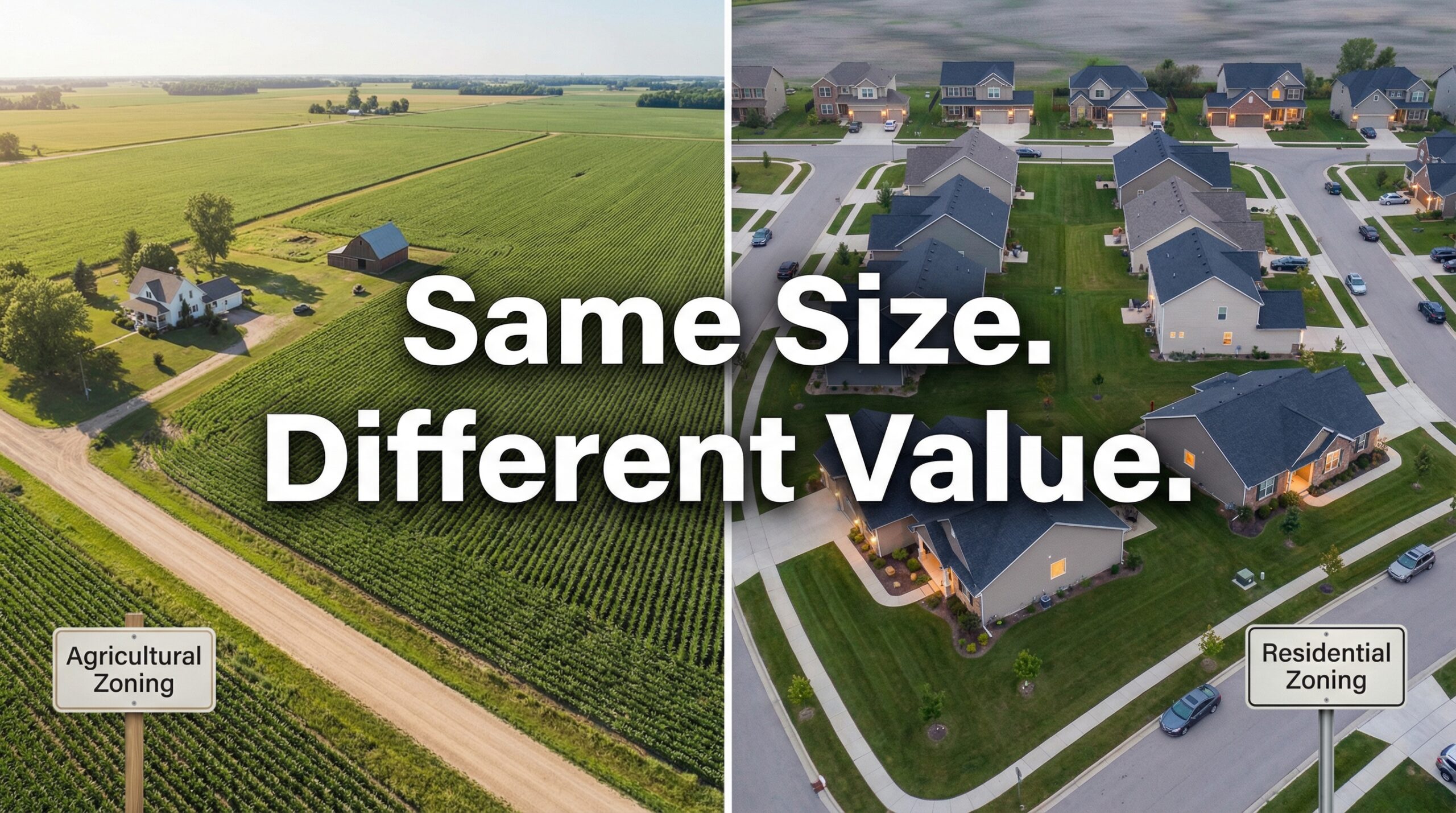
Two parcels of similar size can have dramatically different values depending on zoning
classification.
Before determining value, confirm:
Current zoning designation
Allowed uses
Minimum lot size
Setbacks
Overlay restrictions
Without this clarity, valuation becomes guesswork.
Step Two: Location Within or Near the Urban Growth Boundary
In Oregon, urban growth boundaries (UGBs) significantly affect land value.
Land inside or near Salem’s urban growth boundary often carries greater development potential
than rural acreage outside city limits.
Inside UGB:
Greater likelihood of utilities
Higher residential density
Stronger buyer demand
Outside UGB:
Agricultural or forest limitations
Lower density allowances
Reduced development flexibility
Understanding UGB placement is critical to accurate valuation.
Step Three: Access and Road Frontage
Access is frequently underestimated in land valuation.
Questions to evaluate:
Does the property have legal access?
Is access paved or private road?
Are there shared access agreements?
Is road frontage sufficient for development?
Landlocked parcels often sell at significant discounts.
Private road maintenance obligations can also affect value.
Access issues can dramatically alter buyer demand.
Step Four: Utility Availability
Utilities influence buildability and therefore value.
Key utilities include:
Water
Sewer or septic feasibility
Electricity
Natural gas
Internet access
Urban parcels with sewer and water access typically command higher prices.
Rural parcels requiring well and septic installation may involve higher development costs,
reducing net value.
Confirm availability before estimating market value.
Step Five: Topography and Usable Area
Not all acreage is equally usable.
Factors affecting usable land include:
Steep slopes
Wetlands
Flood zones
Soil conditions
Timber density
Environmental overlays
Two 5-acre parcels may differ substantially in buildable footprint.
Professional site evaluation may be necessary for development potential analysis.
Usable area often drives price more than total acreage.
Step Six: Comparable Sales — But Used Correctly
Land comparables must be carefully selected.
Unlike residential property, land comparables require matching:
Zoning
Utility availability
Access type
Development feasibility
Lot size
Simply comparing price per acre can be misleading.
Urban infill lots may sell for far more per acre than rural agricultural parcels.
True comparables must reflect similar use potential.
Step Seven: Timber and Agricultural Value
In parts of Salem and the Willamette Valley, timber and agricultural potential influence land
value.
Timberland may carry:
Harvestable timber value
Long-term growth cycles
Agricultural land may qualify for:
Farm use valuation
Income potential
Understanding timber volume and agricultural capability can materially impact valuation.
Without proper assessment, value may be underestimated or overstated.
Step Eight: Development Potential and Partition Feasibility
Development potential can significantly increase land value.
Questions to evaluate:
1. Can the land be partitioned?
2. Does zoning allow subdivision?
3.Are utilities available to support additional lots?
4. Are there infrastructure capacity limits?
Partitioning one parcel into two or more lots may increase total property value — but only if
legally feasible.
City planning regulations determine feasibility.
Accurate valuation requires realistic development analysis, not assumption.
Common Mistakes in Land Valuation
1. Assuming All Acres Are Equal
Usability matters more than size alone.
2. Ignoring Zoning Restrictions
Zoning drives use and price.
3. Overestimating Development Potential
Subdivision is not always permitted.
4. Using Inaccurate Comparables
Land value is highly location-specific.
5. Relying on List Prices
Active listings reflect asking prices, not actual sale values.
Market Conditions in Salem Oregon
Land value in Salem is influenced by:
1. Population growth
2. Housing demand
3. Interest rates
4. Infrastructure expansion
5. Regulatory changes
Urban infill properties often experience stronger demand than remote acreage.
Market cycles also affect absorption time.
Understanding local trends improves valuation accuracy.
Income Potential vs Appreciation
Some land generates income through:
1. Agricultural leases
2. Timber harvest
3. Recreational use
Income can increase property attractiveness and value.
Vacant land without income relies on appreciation and development potential.
The difference influences buyer demand and pricing.
Questions to Ask When Valuing Land
1. What is the zoning and allowable use?
2. Is the property inside the urban growth boundary?
3. Does it have legal access?
4. Are utilities available?
5. How much of the land is buildable?
6. Are there comparable sales with similar characteristics?
7. Is there income potential?
Clear answers lead to more accurate pricing.
Frequently Asked Questions
How do you determine the value of vacant land?
By analyzing zoning, location, access, utilities, topography, and comparable sales.
Is price per acre reliable?
Only when comparing properties with identical zoning and use potential.
Does land inside city limits have higher value?
Often yes, due to infrastructure and development flexibility.
Can timber increase land value?
Yes, depending on harvest volume and quality.
Should I get a professional valuation?
For significant parcels or development potential, professional evaluation is advisable.
Final Analysis
Valuing bare land in Salem Oregon requires more than reviewing nearby listings.
True value depends on:
Zoning
Buildability
Access
Utilities
Development feasibility
Market demand
Without careful evaluation, land may be mispriced — either too high or too low.
Accurate valuation is the foundation for informed decisions, whether selling, holding,
developing, or repositioning property.
Understanding these factors transforms land ownership from speculation into strategy.