
What Is EFU Zoning in Oregon and Can I Build on It?
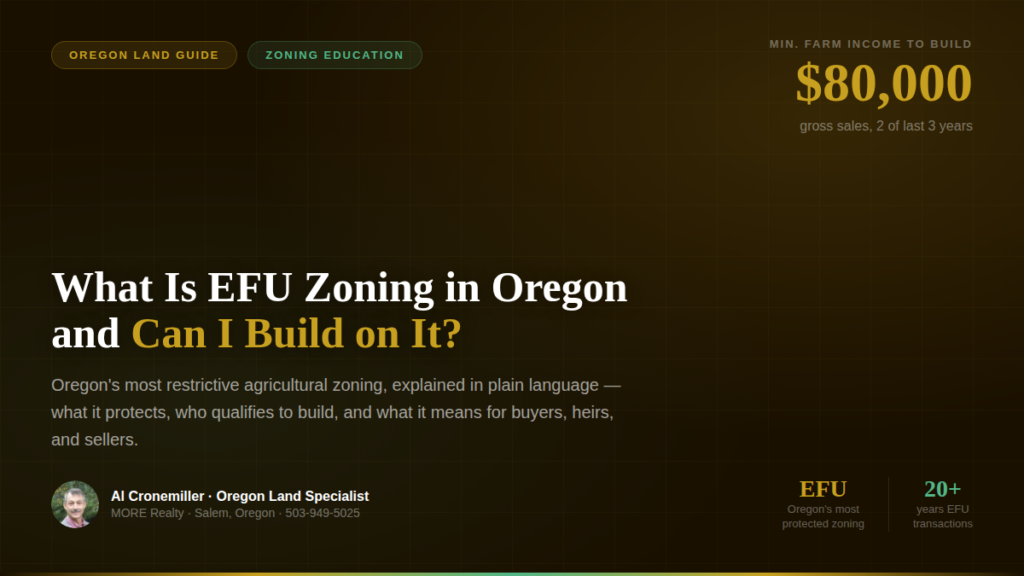
EFU Zoning: Oregon’s most restrictive agricultural zoning explained — what EFU land protects, who actually qualifies to build a home on it, and what it means for buyers, heirs, and sellers.
How to Transfer Title of Inherited Land in Oregon: A Step-by-Step Guide
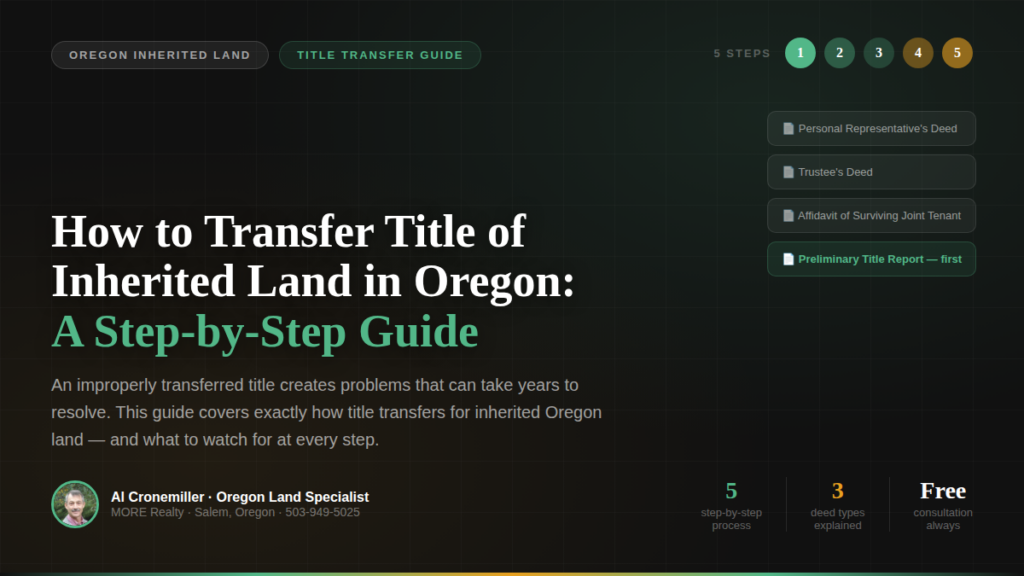
Transferring title of inherited land in Oregon is a legal process with specific requirements that must be followed correctly. An improperly transferred title creates problems that can take years and significant legal expense to resolve.
How the transfer works depends entirely on how the deceased held ownership. Individually owned land with a will goes through probate — the personal representative ultimately executes a Personal Representative’s Deed conveying title. Land held in a revocable living trust transfers through a Trustee’s Deed executed by the successor trustee, with no probate required. Jointly owned land with right of survivorship passes automatically through an Affidavit of Surviving Joint Tenant filed with the county recording office.
In every case, ordering a preliminary title report before any sale is attempted is essential. Old liens, unclear easements, boundary discrepancies, and ownership gaps must be identified and resolved before a buyer can obtain title insurance and close. This is the step most heirs skip and the one that causes the most expensive delays.
Read the full guide at HomesForSaleSalemOregon.net or call Al Cronemiller at 503-949-5025.
Can You Sell Inherited Land Before Probate in Oregon?
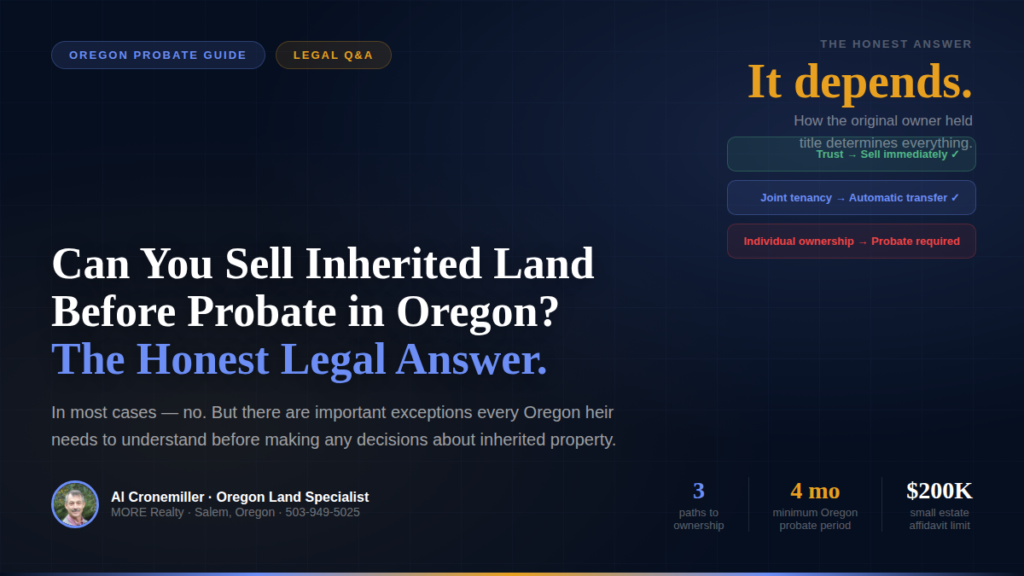
This is one of the most frequently asked questions Oregon heirs ask — and the honest answer is: it depends entirely on how the original owner held the property.
In most cases involving individually owned Oregon land, you cannot legally sell before probate is substantially advanced. To transfer clear title, the seller must have legal authority over the property — and in Oregon, when someone dies owning real estate individually, that authority must be established through the probate court before any sale can occur.
But there are important exceptions. Land held in a revocable living trust can often be sold immediately by the successor trustee with no probate required. Jointly owned land with right of survivorship transfers automatically at death. And Oregon’s small estate affidavit process may offer a faster path for qualifying estates under $200,000 in real property value.
Understanding which path applies to your situation is the first and most important step — and it costs nothing to find out.
Read the full guide at HomesForSaleSalemOregon.net or call Al Cronemiller at 503-949-5025.
Sell Inherited Land Fast in Oregon: What Actually Speeds Up the Sale
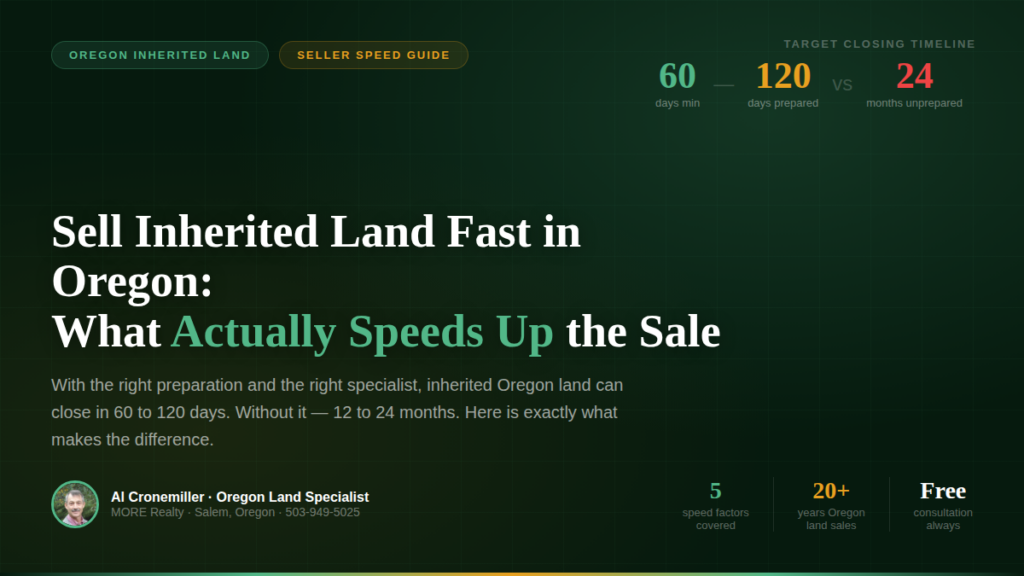
Speed and Oregon land sales are not natural companions. Bare land typically sits on the market for 12 to 24 months when marketed through conventional channels. But with the right preparation and the right specialist, inherited Oregon land can close in 60 to 120 days from the day the listing agreement is signed.
The difference between a fast inherited land sale and a slow one almost never comes down to the market. It comes down to five things: legal ownership confirmed before listing, heir alignment established early, documentation assembled in advance, accurate pricing from day one, and direct outreach to the motivated buyers who never see a Zillow listing.
Most inherited Oregon land sales take too long because sellers are reacting instead of preparing. This guide tells you exactly what to do — and when — so that the moment legal authority is established, everything else is already in place to move.
Read the full guide at HomesForSaleSalemOregon.net or call Al Cronemiller at 503-949-5025.
How to Find Hunting Land Buyers in Oregon (Sell Faster for the Best Price)

Looking to sell hunting land in Oregon? Discover how to attract serious hunting land buyers, price your property correctly, and close faster.
Unwanted Land Buyers in Oregon: How to Sell Your Property Fast and Stress-Free
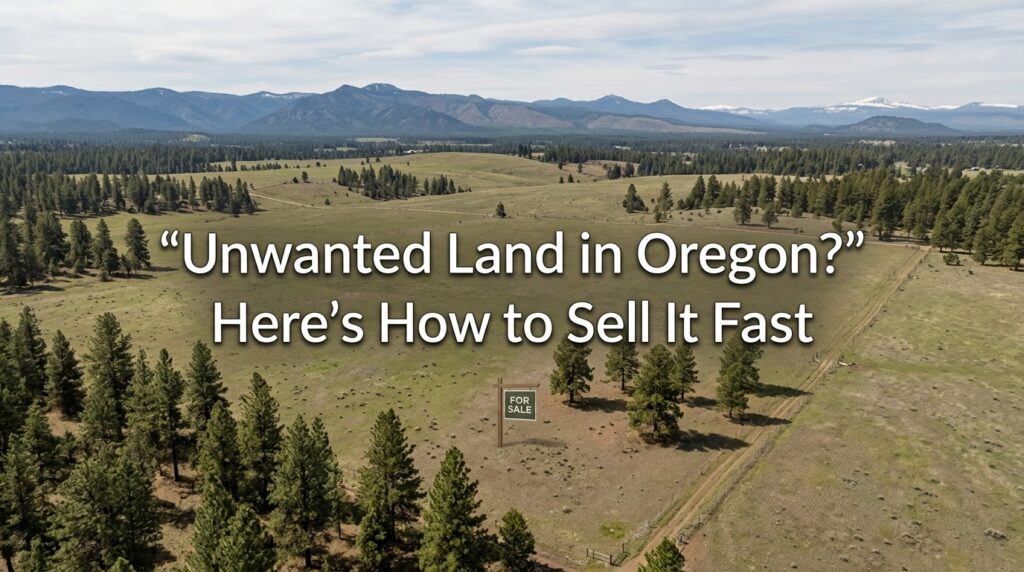
If you own land in Oregon that you no longer want, you’re not alone. Many property owners struggle to sell vacant or unused land through traditional methods. Discover how unwanted land buyers in Oregon can help you sell quickly, avoid fees, and turn your property into cash with ease.
Tax Deferred Real Estate Swap in Oregon: How to Use a 1031 Exchange to Build Wealth

A tax deferred real estate swap also known as a 1031 exchange allows Oregon property owners to sell land and reinvest the proceeds without paying immediate capital gains taxes. Learn how this powerful strategy helps investors preserve capital and grow their real estate portfolio.
15 Questions to Answer Before Selling Land in Oregon | Expert Guide
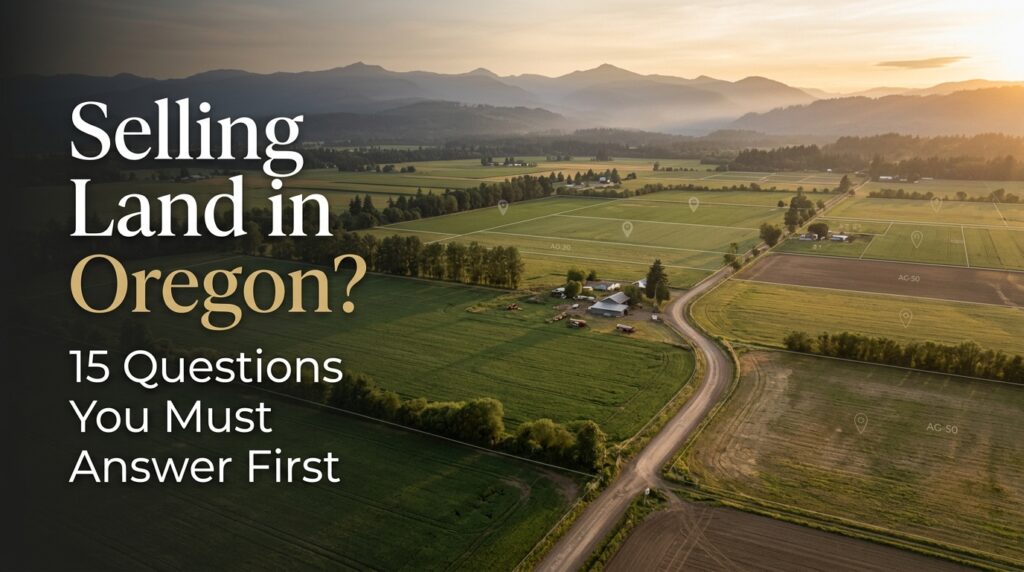
Thinking of selling land in Oregon? Discover the 15 most searched questions, expert answers, and how to maximize your land value in Salem, Willamette Valley, and beyond.
Vacant Land for Sale Oregon: What Buyers Want Right Now
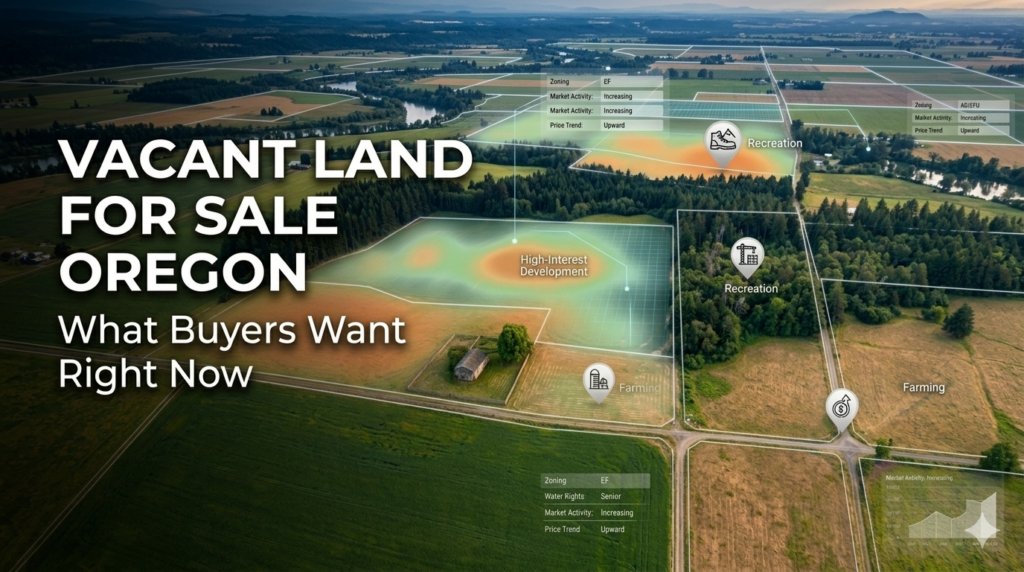
The market for vacant land in Oregon is active, analytical, and unforgiving of sellers who aren’t prepared. Today’s buyers know exactly what they’re looking for from zoning and water access to road access and comparable sales. Understanding what buyers evaluate first can make the difference between a fast sale and months sitting on the market.
Sell Inherited Land Oregon: The Tax Advantage Most Heirs Never Use
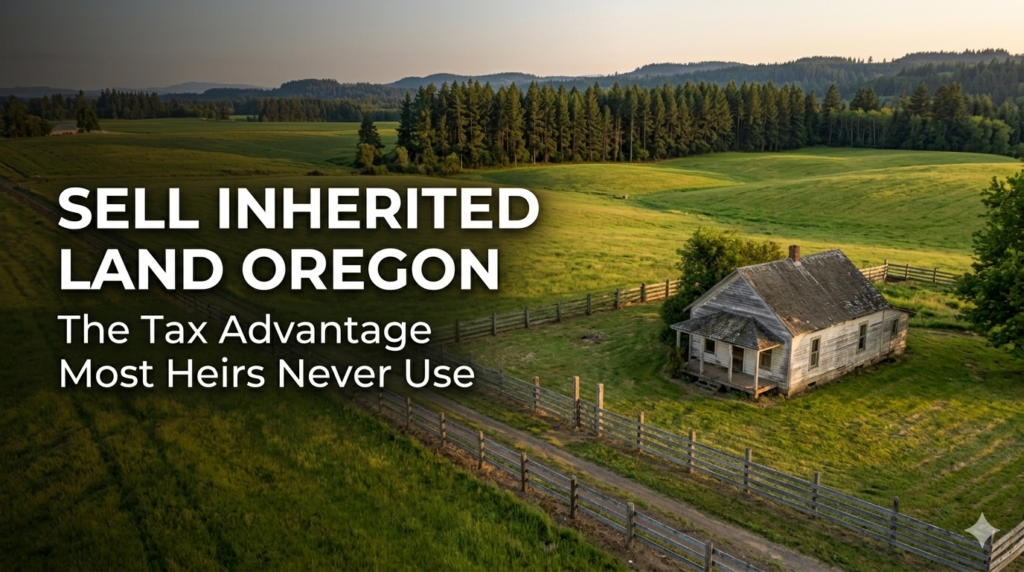
Inheriting land in Oregon can bring both opportunity and complexity. One of the most valuable tax advantages available to heirs is the stepped-up basis a rule that can eliminate capital gains tax when inherited property is sold. Yet many families don’t learn about this benefit until it’s too late. Understanding how the stepped-up basis works can significantly impact the financial outcome when selling inherited land.